Buddha Quotes
When watching after yourself, you watch after others. When watching after others, you watch after yourself.
The political-economic philosophy differences between capitalism and socialism has at the extremes pitted self interest against communal obligation. Most long term successful societies have a balance and avoid the extremes. This is exactly what the Buddha recommended herein.
Buddha, 563 BC-483 BC, [Gautama Siddartha], Religious Founder, Samyutta Nikaya
Sourced by: Eigen's Political and Historical Quotations


Later in his life Auden was upset with the last line and insisted that his 1955 publisher replace the “or” with “and.”


There were few reformers who had such a long, extensive, and activist career in both England and India. She began her career as a minister’s wife but was literally turned out of her house by her husband for whom she was not religiously orthodox enough. This started her religious activism which ended with her as an atheist. She led a match-girl’s strike, founded a Hindu college in India, and was even arrested for pornography in England when she wrote a book advocating birth control. She is on many lists of “Great Indians” along with Gandhi and Nehru. She was Jiddu Krishnamurti’s teacher.


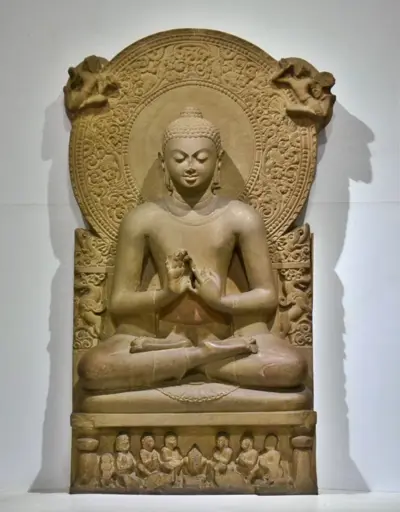
The Buddha (also known as Siddhattha Gotama or Siddhārtha Gautama or Buddha Shakyamuni) was a philosopher, mendicant, meditator, spiritual teacher, and religious leader who lived in what is now Nepal and India (c. 5th to 4th century BCE). He is revered as the founder of the world religion of Buddhism, and recognized by most Buddhist schools as the Enlightened One who is believed to have transcended Karma and escaped the cycle of birth and rebirth. He taught for around 45 years and built a large following, both monastic and lay. His teaching is based on his insight into duḥkha (typically translated as "suffering") and the end of dukkha—the state called Nibbāna or Nirvana.
