William Wells Brown Quotes
When this boy was brought to Dr. Young, his name being William, the same as mine, my mother was ordered to change mine to something else. This, at the time, I thought to be one of the most cruel acts that could be committed upon my rights.
Brown, William Wells. Narrative of William W. Brown, a Fugitive Slave. Written by Himself. Anti-Slavery Office, 1847, p. 17.


Niemoller, a World War I U-boat commander and clergyman, was jailed for rejecting the National Socialist ideology and for appealing to German Christians not to embrace the new paganism. He was visited in prison by a fellow pastor who expressed surprise at seeing him behind bars.


He was convicted for treason for passing secrets to the Germans and sentenced to life imprisonment on Devil’s Island. However, he had been the victim of an anti-Semitic plot to cover up for the real traitor—a Christian. However the ”Dreyfus Affair” brought out the virulent anti-Semitism in France. When the truth was exposed, Dreyfus was pardoned, and reinstated in the military, but 11 years in Devils Island had taken its toll on his heath, and he was retired as a result of his disability.


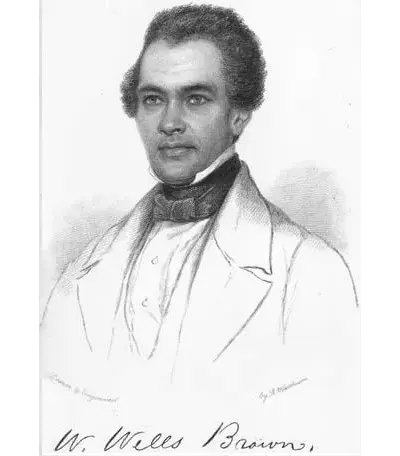
William Wells Brown was a prominent African-American abolitionist lecturer, novelist, playwright, and historian in the United States. Born into slavery in Montgomery County, Kentucky, near the town of Mount Sterling, Brown escaped to Ohio in 1834 at the age of 19. He settled in Boston, Massachusetts, where he worked for abolitionist causes and became a prolific writer. While working for abolition, Brown also supported causes including: temperance, women's suffrage, pacifism, prison reform, and an anti-tobacco movement. His novel Clotel (1853), considered the first novel written by an African American, was published in London, England, where he resided at the time; it was later published in the United States.
