Joseph Rotblat Quotes
When the START 2 treaty has been implemented - and remember it has not yet been ratified - we will be left with some 15,000 nuclear warheads, active and in reserve. Fifteen thousand weapons with an average yield of 20 Hiroshima bombs.
Rotblat, Joseph. "Remember Your Humanity." Les Prix Nobel: The Nobel Prizes 1995, edited by Tore Frängsmyr, Nobel Foundation, 1996.


The origin of the United States refusal to rule first use out lies with the Cold War concern of a massive Russian Ground attack in European countries. Even with NATO, we could not deploy ground and air resources fast enough to prevent the takeover of entire countries. Then when we amassed the troops and airpower to counterattack, there would be massive civilian casualties of the invaded nations. So American strategy, at the insistence of our European Allies was to deter invasion. By renouncing first use, the Western Powers would almost invite the Russians to invade European nations. There was a similar fear of North Korea and China,
Many politicians and military thinkers disagree with Kraus. America, England, France, Russia, and Israel have all demonstrated over the years that even with great provocation they would not resort to nuclear retaliation nor have they ever threatened use of WMDs. Iran, in contrast, has repeatedly stated as one of their major objective, the total destruction of another UN member state—Israel. Further, Iran has never possessed a weapon that it did not use shortly after possession, including poison gas. Therefore America and the United Nations have all determined that a double standard is necessary with Iran.


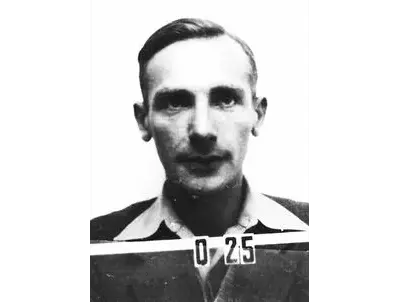
Sir Joseph Rotblat KCMG CBE FRS was a Polish physicist, a self-described "Pole with a British passport". Rotblat worked on Tube Alloys and the Manhattan Project during World War II, but left the Los Alamos Laboratory after the war with Germany ended. His work on nuclear fallout was a major contribution toward the ratification of the 1963 Partial Nuclear Test Ban Treaty. A signatory of the 1955 Russell–Einstein Manifesto, he was secretary-general of the Pugwash Conferences on Science and World Affairs from their founding until 1973 and shared, with the Pugwash Conferences, the 1995 Nobel Peace Prize "for efforts to diminish the part played by nuclear arms in international affairs and, in the longer run, to eliminate such arms."
