Franklin P. Adams Quotes
When the political columnists say 'Every thinking man' they mean themselves, and when candidates appeal to 'Every intelligent voter' they mean everybody who is going to vote for them.
Franklin P. Adams, 1881-1960, Journalist and Columnist, Nods and Becks, 1944
Sourced by: Eigen's Political and Historical Quotations


Politicians with power and authority are particular targets for flatterers as well as critics—the latter in a democracy.


Amy is responding to Michelle Obama’s claim that “any woman who voted against Hillary Clinton voted against their own voice.”


Although, the Obama administration vastly improved on this requirement compared to the George W. Bush administration excesses, he was not able to eliminate it. Some would argue that it should NOT be eliminated in that military planning ought to be driven and controlled by the people in a democracy, and therefore the process is inherently political. However few would defend the Bush ideologically driven military planning and decision making.

Muller warns of a very common error made by most politicians and critics who are faced with populism. To ignore them is also self defeating. Best results seem to come from just calmly present factual counter evidence to whatever is being alleged at the moment. And to acknowledge their right in a democracy to think as they do, but we respectfully disagree. The respect is very important in interacting with populists whose major complaint is most often that they are not regarded with dignity in the society as it now exists. And for many educated, above-average intellect people, there is a difficulty in extending their egalitarian philosophy to those who do not honor, respect or even understand the major tenets and norms of intellectual interaction. In most cases, the politicians who have populist appeal not only treat the people with great dignity and appreciation (feigned or real), but take of the cry for their complaints and suspicions in more eloquent oratory that the disaffected people are able to themselves, and that is a great part of the seemingly magic hold that the populist politician seems to have over his constituency.


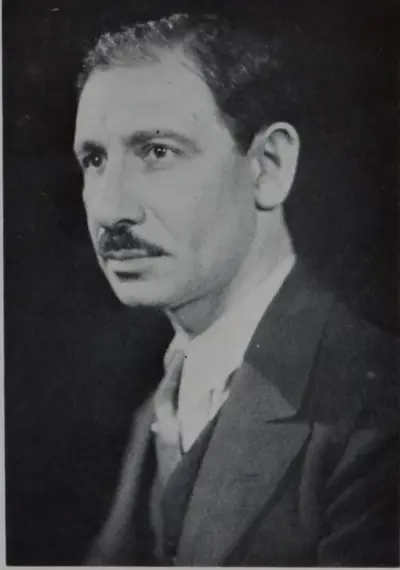
Franklin Pierce Adams was an American columnist known as Franklin P. Adams and by his initials F.P.A.. Famed for his wit, he is best known for his newspaper column, "The Conning Tower", and his appearances as a regular panelist on radio's Information Please. A prolific writer of light verse, he was a member of the Algonquin Round Table of the 1920s and 1930s.
