Gwen Ifill Quotes
When population shifts - brought about by fair housing laws, affirmative action and landmark school desegregation rulings - political power is challenged as well.
Ifill, Gwen. The Breakthrough: Politics and Race in the Age of Obama. Doubleday, 2009, p. 45.

Arkansas Governor Faubus ordered the national guard to prevent Black students from integrating Central High School in Little Rock. President Eisenhower was a man of action and not rhetoric and his lack of firm public statements overlooked an opportunity to use the Presidential “bully pulpit” and exercise his moral leadership and authority. Armstrong was irate at Eisenhower for appearing to do nothing and say nothing. See {615852}. When Eisenhower did enforce the court order and used Federal troops, Armstrong sent him this congratulatory telegram. His reference to walking into the schools was in support of many who suggested that the best thing the President could have done was to personally take one of the Black students by the hand and walk into the school with him or her. With the mood of the Southern racists, such an act was potentially very risky for the President and it is not known whether of not the President and his staff ever considered such an act.


The decision was 5-4 and reversed a trend in which the court had been going before. Roberts and another appointment by George W. Bush tilted the majority. See {614911} for a quotation from the 4 justice dissent.

In this case she provided the crucial 5th vote for the majority upholding racial preferences in affirmative action cases.

He maintained these policies even after President Eisenhower’s January 1954 speech calling for people who were displaced as the result of urban renewal projects to be provided with Federal assistance in housing regardless of race. It is not known whether Sherman Adams shared Cole’s position with the President. Adams himself was forced to resign in a corruption scandal.
He was the first FHA administrator to make statements saying that non-discriminatory housing services should be available to the American people. At the time the Southern states had laws allowing and protecting legal segregation especially in housing. The Southern field staff interpreted his instruction to be sure that both blacks and whites had access to FHA services, but they used the “separate but equal” doctrine: Provide services to both races but always in segregated housing projects. This was typical of the kinds of problems that motivated the Civil Rights Acts offered by President Kennedy in 1963 and passed by President Johnson in 1964. See {637272} for a similar Mason statement.
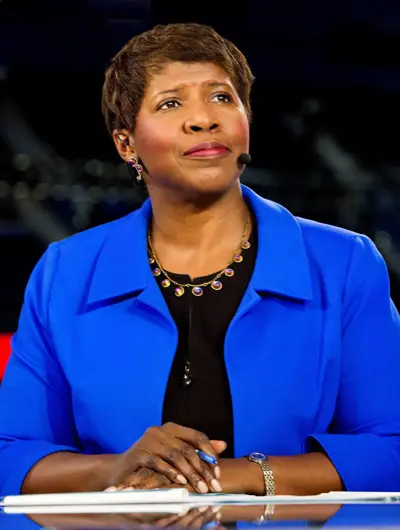
Gwendolyn L. Ifill was an American journalist, television newscaster, and author. In 1999, she became the first African-American woman to host a nationally televised U.S. public affairs program with Washington Week in Review. She was the moderator and managing editor of Washington Week and co-anchor and co-managing editor, with Judy Woodruff, of the PBS NewsHour, both of which air on PBS. Ifill was a political analyst and moderated the 2004 and 2008 vice-presidential debates. She authored the best-selling book The Breakthrough: Politics and Race in the Age of Obama.
