Toussaint Louverture Quotes
When it shall be known that, at the time which I was accused of wishing to sunder this island from France - my benefactress - I repeated the oath of fidelity to her, I take pleasure in believing that the government I own, and my fellow-citizens, will render me the justice I merit, and that the enemies of my brethren will be reduced to silence.
Beard, John R. The Life of Toussaint L'Ouverture, the Negro Patriot of Hayti. Ingram, Cooke, and Co., 1853, p. 165.


President Benjamin Harrison and Congress proclaimed that October 31, 1892 be a national celebration of the 400th Anniversary of Columbus landing in America. Bellamy represented a juvenile weekly publication and was named chairman of the committee to conduct the celebration. A first draft of the pledge was written by James B. Upham, a staff member of the publication. The words "under God" were added in 1952 by an Act of Congress. The original had “to my flag.” The pledge was first used publicly at the Chicago World’s Fair on October 21, 1892. It was not endorsed by Congress until 1942. It is officially recognized as law in 36 United State Code 172.

See Noah Webster and Timothy Pickering for similar positions. The War of 1812 was very unpopular with the New England states. They had the most developed trade with England and were economically injured by the curtailment of that trade. The citizens of Essex wanted to give the State Legislature the most possible moral and political power to negotiate an end to the war.


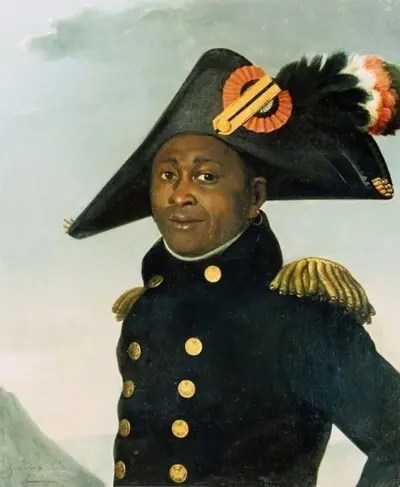
François-Dominique Toussaint Louverture was a Haitian general and the most prominent leader of the Haitian Revolution. During his life, Louverture first fought against the French, then for them, and then finally against France again for the cause of Haitian independence. As a revolutionary leader, Louverture's military and political acumen helped transform the fledgling slave rebellion into a revolutionary movement. Louverture is now known as the "Father of Haiti."
