Toyin Odutola Quotes
When I was in school, I conceptually didn't want black people to have context, to take it out of all that history. I wanted nothing to indicate where they are or what time it is, to place them anywhere.
Visco, Gerry. "Discovery: Toyin Odutola." Interview, 20 Dec. 2012.


Moynihan was actually not the political originator of the "benign neglect" phrase which became so controversial. It had been first used by The Earl of Durham in his 1839 Durham Report on the English policy towards Canada.


This painting depicted a young black girl walking to school surrounded by 4 U. S. Marshalls protecting her from the crowd of white racists trying to prevent her from attending an elementary school under court order. The vicious race hatred that school integration revealed was the national problem that was then surfacing. The graphic is the illustration that appeared in Look with that name.

On the day of the March on Washington the Congress of Racial Equality asked Levitt if he would change his policies on discrimination against Negroes. This quotation, perhaps more than any, other illustrates why legal discrimination was so pernicious. Any builder who tried to break down the housing color barrier would pay an economic penalty and the moral issue became economic. In trying to change America’s attitude on race the people who is the way would then be punished economically. This is why both the black-and-white leadership who wanted desegregation realized that it had to be done by legislation, and not by a process of education and persuasion. In housing a persuaded convert could not act alone without severe penalty. Even after housing discrimination was made illegal, the builders who desegregated suffered somewhat for many years because so many people found ways to evade the law, and government officials at all levels were reluctant to enforce the law.


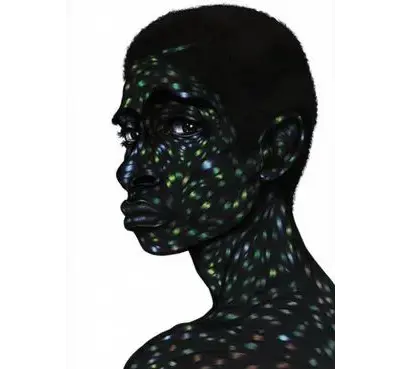
Toyin Ojih Odutola (born 1985) is a Nigerian-American contemporary visual artist known for her vivid multimedia drawings and works on paper. Her unique style of complex mark-making and lavish compositions rethink the category and traditions of portraiture and storytelling. Ojih Odutola's artwork often investigates a variety of themes from socio-economic inequality, the legacy of colonialism, queer and gender theory, notions of blackness as a visual and social symbol, as well as experiences of migration and dislocation.
