Lady Gregory Quotes
When I was a child and came with my elders to Galway for their salmon fishing in the river that rushes past the gaol, I used to look with awe at the window where men were hung, and the dark, closed gate.
Lady Gregory. Seven Short Plays. Maunsel & Co., 1909, p. 200.

Reacting after reading parts of the Pentagon Papers, a study on the history of the Vietnam war he had ordered:


Elliott had electrocuted over 400 condemned criminals including Sacco and Vanzetti and the first woman who was electrocuted.

This has been the case in EVERY jurisdiction that has had capital punishment. Capital punishment does provide vengeance for victims, relatives and society. And in many societies execution is less expensive than prison for life. But it has never curtailed crime despite the example. In London, they used to have public executions as examples to inhibit crime. While the crowd was watching a pickpocket be hung, other pickpockets were relieving many spectators of their wallets and watches.

The Stoning coincidence for adultery between the Old Testament in Europe and the Middle East and the Aztecs of Mexico was probably nothing more. There is no evidence of any kind that the Aztecs of this period knew anything about the Bible.
Note that the fact that she had suffered sposal abuse. She poisoned her husband who repeadedly beat her and her children. Althoughh the evidence was heard, there was nothing that could in the then German legal system used to justify the killing of a husband. Germany was not then the only country which would not allow violent spousal abuse as a defense or a mitigating factor in the sentence. The German punishment for a woman murdering her husband was then beheading. Even as late as the mid 19th century, they were still decapitating trangressors of their laws. The Germans actually developed a special kind of sword with no point just for beheadings.


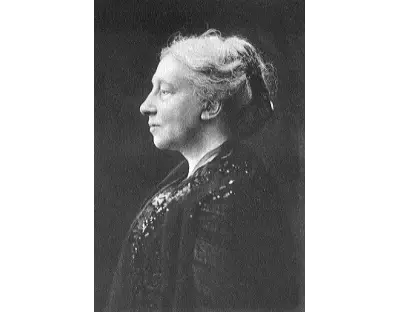
Isabella Augusta, Lady Gregory was an Irish dramatist, folklorist and theatre manager. With William Butler Yeats and Edward Martyn, she co-founded the Irish Literary Theatre and the Abbey Theatre, and wrote numerous short works for both companies. Lady Gregory produced a number of books of retellings of stories taken from Irish mythology. Born into a class that identified closely with British rule, she turned against it. Her conversion to cultural nationalism, as evidenced by her writings, was emblematic of many of the political struggles to occur in Ireland during her lifetime.
