George Bernard Shaw Quotes
When I speak of The Case for Equality I mean human equality; and that, of course, can only mean one thing: it means equality of income.
Shaw, George Bernard. The Case for Equality. National Liberal Club, 1913.


Excesses that CEOs and other corporate executives were getting for remuneration became an issue of political controversy in the beginning of the 2nd Milleneum. However, this quotation shows that this was not a new problem and has been considered for a long time.


The only publication with a full time Poverty beat
At the time of this quotation, the nation had gone through more than 3 decades of enormous increase in prosperity for the wealthy, and modest gains for the highly skilled, technically trained workers. However, correcting for inflation, average salaries did not increase at all. The middle class was particularly hard hit. Only 20 percent of the population benefitted from the growth at all; however, the 1 percent had rarely prospered more. Kenworthy’s principle did not apply for this period of American history.


This quotation from the Koran is used by some to show that Islam was ahead of the West in terms of allowing women to earn their own money and inherit property. In this sense Islam was in the 7th Century far ahead of their Christian and Jewish Counterparts.
However, with this initial start, there is no version of Sharia (Islamic Law) that provides for men and women to earn equally for equal work. Further, there is no right to work at all. In Saudi Arabia, until 2005 women shopping for their own underwear had to buy from men as women were not allowed to be retail clerks. And the Taliban in Afghanistan required women to remain in their home and not work any other place. Even female doctors and nurses were not allowed to work in hospitals. Although they were allowed to control whatever meager income they might earn in their homes.


The Prime Minister had begun his career as a proponent of apartheid, but by 1990 had reversed course.
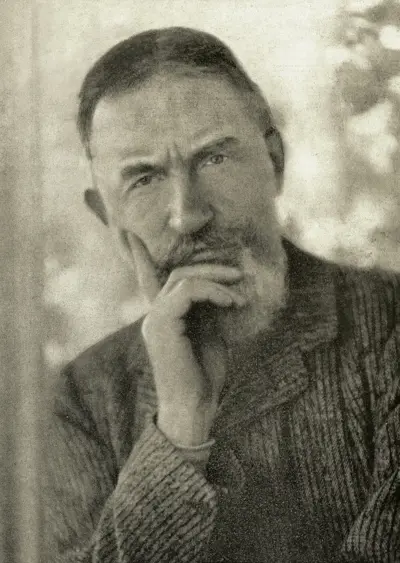
George Bernard Shaw, known at his insistence simply as Bernard Shaw, was an Irish playwright, critic, polemicist and political activist. His influence on Western theatre, culture and politics extended from the 1880s to his death and beyond. He wrote more than sixty plays, including major works such as Man and Superman (1902), Pygmalion (1912) and Saint Joan (1923). With a range incorporating both contemporary satire and historical allegory, Shaw became the leading dramatist of his generation, and in 1925 was awarded the Nobel Prize in Literature.
