Ludwig von Mises Quotes
In talking about equality and asking vehemently for its realization, nobody advocates a curtailment of his own present income.
Mises, Ludwig von. Human Action: A Treatise on Economics. Yale University Press, 1949, p. 836.


The only publication with a full time Poverty beat

The crisis of inequality of income and wealth has occurred seven times in American history.


The subtlety of equality has always been problematical in republics and democracies. Generally experience and common sense tells us that not all people are equal in all variables and talents. “Equality” is in the democratic sense means that society gives all equal rights, dignity and respect, not that we can eliminate the individual differences between people.


The debate over income inequality generally ranges between the two extremes of Christie’s hypothetical equal, mediocre salary to the extreme wealth of the 1% controlling most of the wealth. However , where America was moving in its most general affluent times was not towards equal compensation, but to a large range of remuneration with the low end and middle constantly increasing over time and the high end a reasonable multiple of the low end. However, the breakdown came in the last decades of the 20th century and the early 21st century when the low end did not increase (discounting for inflation) in 40 years, nor did the middle, while the high end increased enormously. So the nation had 40 years of growth without the lower or middle classes benefitting much and all the benefit going to the wealthy and most of that to the very wealthy. Thus the instinct was to tax the wealthy more heavily and spending the money to increase opportunity for the lower and middle classes. However, the political battle was waged over the taxing issue and not on what could be done to have the poor and the middle class obtain a larger proportion of the growth and a smaller percentage of the setbacks.


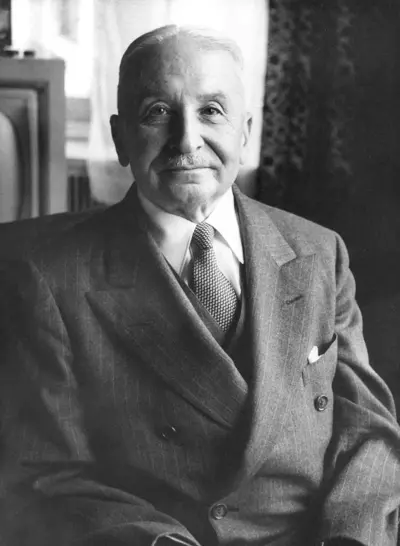
Ludwig Heinrich Edler von Mises was an Austrian School economist, historian, logician and sociologist. Mises wrote and lectured extensively on the societal contributions of classical liberalism. He is best known for his work on praxeology, a study of human choice and action.
