Grace Lee Boggs Quotes
When I came to Detroit, if you threw a stone up in the air and it came down, it would hit an autoworker because the Chrysler Jefferson plant where my husband worked was very close also to where we lived.
Boggs, Grace Lee. Interview by Bill Moyers. Bill Moyers Journal, PBS, 15 June 2007.


He had already decided to save General Motors which was much larger and more critical to the national economy. The normal capitalistic broken down and there were no private firms that were willing to invest, control and continue the companies at any price. There were 1 million immediate jobs at stake with GM plus the collapse of the American Auto Industry including dealers and suppliers. With Chrysler, there were only 300,000 immediate jobs at stake. Ironically, one of the major reasons for trying to save both companies was the fact that Summers team had discovered that the companies were very badly managed. If the bailout could be leveraged to force radical management change and reform, the chances of success would have been much greater than if the companies had been well managed but were still losing money rapidly. The policy decision was brilliantly successful. The reformed auto companies quickly became profitable, and the taxpayer loans were paid back early with interest to and profits to the taxpayers. All those jobs and an iconic American industry not only were preserved but became very profitable and strong and in the final analysis, it did not cost the taxpayers even one dollar. Ford was in less trouble, but if the other two companies failed, the Ford suppliers would mostly fail, and Ford also would have gone down.

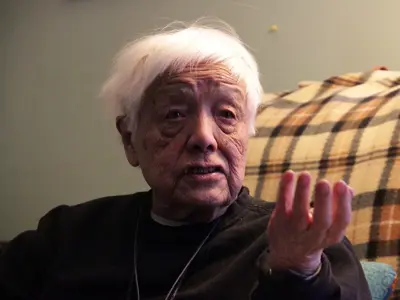
Grace Lee Boggs was an American author, social activist, philosopher, and feminist. She is known for her years of political collaboration with C. L. R. James and Raya Dunayevskaya in the 1940s and 1950s. In the 1960s she and James Boggs, her husband of some forty years, took their own political direction. By 1998, she had written four books, including an autobiography. In 2011, still active at the age of 95, she wrote a fifth book, The Next American Revolution: Sustainable Activism for the Twenty-First Century, with Scott Kurashige and published by the University of California Press. She is regarded as a key figure in the Asian American Movement.
