Simon Singh Quotes
When I attended a forum on libel reform at the British Academy in 2011, 20 figures ranging from law professors to leading libel law firm, Carter Ruck, from MPs to free speech groups, discussed the issue of corporations. There was unanimous agreement that there needed to be restrictions on the right of corporations to sue in libel.
Singh, Simon. "Corporations and libel law." The Guardian, 2012.


Arguing agaist libel and sedition prosecutions:


This law would certainly be held unconstitutional today but at the time it wasn’t even clear that the Supreme Court could nullify a law of Congress. Virginia and Kentucky both passed resolutions however, protesting the law and challenging its constitutionality. The $2,000 maximum fine was huge for the day—the equivalent of more than $1 million today. The reason was that one of the major targets of the law was wealthy printers and publishers, who could be impoverished for a violation. The Sedition Act was in existence until Jefferson ousted the Federalists who passed it (John Adams signed it) and pardoned all those who had been convicted under the law. The Sedition Act is used today as evidence that the Founding Fathers really did not intend that the First Amendment protect speech that is potentially harmful to the country. The counter argument is that the Sedition Act was passed by John Adams and his allies at a particularly vulnerable time in America’s early history. And it was one of the biggest reasons that Adams and the Federalists were defeated after a single term by Thomas Jefferson and the Democrats. The Federalists were so badly beaten that their entire political party was destroyed. The Whig Party evolved as the opposition Party to Jefferson and the Democrats.
This principle was incorporated into American law by the Supreme Court 1964 decision in Sullivan v. New York Times, where this argument drove the opinion.


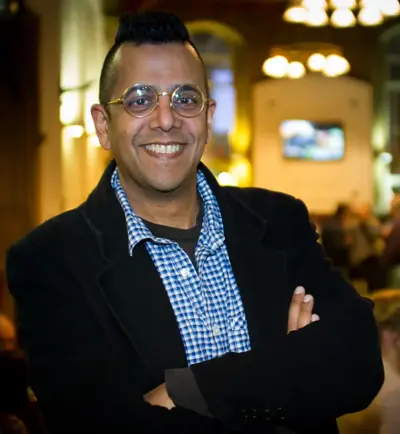
Simon Lehna Singh, MBE is a British popular science author, theoretical and particle physicist whose works largely contain a strong mathematical element. His written works include Fermat's Last Theorem (in the United States titled Fermat's Enigma: The Epic Quest to Solve the World's Greatest Mathematical Problem), The Code Book (about cryptography and its history), Big Bang (about the Big Bang theory and the origins of the universe), Trick or Treatment? Alternative Medicine on Trial (about complementary and alternative medicine, co-written by Edzard Ernst) and The Simpsons and Their Mathematical Secrets (about mathematical ideas and theorems hidden in episodes of The Simpsons and Futurama). In 2012 Singh founded the Good Thinking Society, through which he created the website "Parallel" to help students learn mathematics.
