Aristotle Quotes
When couples have children in excess, let abortion be procured before sense and life have begun; what may or may not be lawfully done in these cases depends on the question of life and sensation.
Aristotle. Politics. Translated by Benjamin Jowett, Clarendon Press, 1885, Book VII, ch. 16.


One of the most contentious activities in all political history is a government trying to regulate the number of children which its citizens can have. When a government tries to do this, they run into opposition by some religious people who oppose birth control in general or some birth control methods (eg abortion). In addition it is opposed by many people who do not want the government involved at all in a decision that is so personal. Yet many governments, under the press of perceived overpopulation, or in an effort to limit mental retardation, have attempted such regulation and that includes the United States where 40 states have at one time or another practiced forced sterilization of people who the state believed were unfit to bear children. China and India—the largest nations of the world—have both maintained government policies and practices to control population with China making it illegal to have more than 1 child. These programs have reduced the population counts, but at a terrible ethical cost and resentment of the affected people.


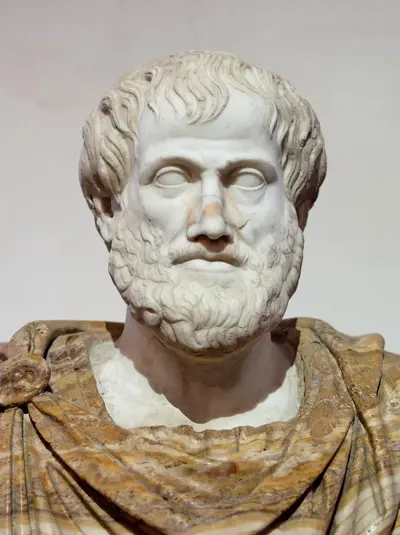
Aristotle (/ærɪˈstɒtəl/; Greek: Ἀριστοτέλης Aristotélēs, pronounced [aristotélɛːs]; 384–322 BC) was a Greek philosopher and polymath during the Classical period in Ancient Greece. Taught by Plato, he was the founder of the Lyceum, the Peripatetic school of philosophy, and the Aristotelian tradition. His writings cover many subjects including physics, biology, zoology, metaphysics, logic, ethics, aesthetics, poetry, theatre, music, rhetoric, psychology, linguistics, economics, politics, meteorology, geology and government. Aristotle provided a complex synthesis of the various philosophies existing prior to him. It was above all from his teachings that the West inherited its intellectual lexicon, as well as problems and methods of inquiry. As a result, his philosophy has exerted a unique influence on almost every form of knowledge in the West and it continues to be a subject of contemporary philosophical discussion.
