Angus Deaton Quotes
When citizens believe that the elite care more about those across the ocean than those across the train tracks, insurance has broken down, we divide into factions, and those who are left behind become angry and disillusioned with a politics that no longer serves them.
Case, Anne, and Angus Deaton. Deaths of Despair and the Future of Capitalism. Princeton University Press, 2020.


The term “rugged individualism” was used at the time be very conservatives and the very wealthy to describe business leladers with words that had very good public connotations. They argued that it would be undesirable to curtail their individualism that was so important by any government regulations or laws that would limit what the business leaders could do. However, the reality was that these very successful and powerful “rugged individualists” had regimented most everyone else—employees, consumers, and small businessmen who might sell them services or products. To Tugwell, if the wealthy and powerful few had no restrictions on their individualism, there would be precious little individualism for most of society. He sought a balance of regulating the individualism and prerogatives of the few somewhat in order to allow the vast majority of people to be able to have individuality as well.


After Roosevelt, most eras of American politics more or less followed the pattern Roosevelt described herein as a “calamity”, with the anger becoming more or less intense. Jefferson thought that these were natural divisions of politics in all societies--{604810}. The thing that masked this for years was race and slavery. In Lincoln’s time there were liberals and conservatives in both parties if race were ignored. In Theodore Roosevelt’s era, he, Taft and others were generally liberal reformers, while a large number of Republicans were conservative supporters of the status quo. Some democrats were radical reformers like William Jennings Bryan while others were arch conservatives. Until 1964 and the Civil Rights Act there were many conservatives in the Democratic Party, but almost all switched to the Republican Party in anger. The Republican conservatives tended to drive the Republican liberals out of the party and for the last part of the 20th century Roosevelt’s “calamity” well described the American political scene, and the anger increased carrying partisan bitterness into the 21st century.

The people at the upper end of the spectrum of wide inequality do not see most communal problems affecting them. As a result, they often do not participate in the attempts to solve those problems.


The Federalists had a majority of both Houses of Congress and the Presidency with George Washington. The establishment of respect for minority views had not yet been established as a tradition. The Anti-Federalists, in order to prevent the Federalists from imposing their own legislation in all fields, used every parliamentary maneuver and delaying tactic. The public, after a few years of the Federalist high-handedness, replaced them with the Jeffersonian Republicans and the Federalists were so badly beaten and unpopular that the party was destroyed, never to rise again.
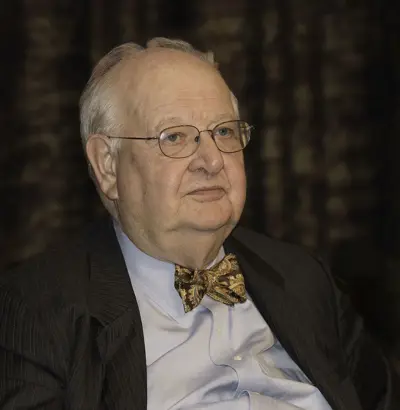
Sir Angus Stewart Deaton FBA is a British-American economist and academic. Deaton is currently a Senior Scholar and the Dwight D. Eisenhower Professor of Economics and International Affairs Emeritus at the Princeton School of Public and International Affairs and the Economics Department at Princeton University. His research focuses primarily on poverty, inequality, health, wellbeing, and economic development.
