Albuquerque Journal Quotes
When bomb bursts … fall flat on stomach. Cover face with arms; close eyes tightly…cover body with a few sheets of newspaper, a board, raincoat, or a torn strip of awning.
At the time most people had very limited knowledge of the effect of nuclear weapons. Parts of the government wanted the public to think that survivability of a nuclear attack at the time was much more likely and probable than the reality that then existed. At the behest of these government agencies, advice like this was typical of what the media were publishing at the time.
Albuquerque Journal, Advice to the public for dealing with a nuclear bomb blast, 1954
Sourced by: Eigen's Political and Historical Quotations


Several weeks later the U. S. blockaded Cuba in what became known as the Cuban missile crisis, to remove the Soviet offensive nuclear capability from Cuba.

The Civil Service Commission was then in charge of all Federal Employees and performed the role that the Office of Personnel Management would later. In retrospect, this memo appears so ludicrous in that a nuclear attack, even in the early 1960’s would do so much damage that people would have a hard time finding a working post office if their office building had been destroyed and any transportation resources available would be used for food, water and medicine and not for civil servants forms to an agency that probably would have few remaining officials. However, at the time most people had very limited knowledge of the effect of nuclear weapons and those who did were only told about the Hiroshima type bomb and not the then new hydrogen nuclear weapons. The people who wrote and authorized this letter were not told how impractical their suggestions were given the lethality of the new ‘super’ bombs.

It was part of the Duck and Cover campaign where school children were taught that in an a nuclear attack they should duck under their school desks and cover their heads with their hands. For other examples of simplistic defense methods that would calm the population see {636091} and England: Whitelaw {614440} and {618657}.

3 days later, President Truman, announced that the Russians had successfully developed an atomic weapon. This quotation gives us another example where the Central Intelligence Agency failed to predict and/or warn America about a crucial event. Others included the North Korean invasion of South Korea, the Arab Spring, the Soviet invasion of Afghanistan, the fall of the Berlin wall, and the collapse of the Soviet Union.
The Booklet told people that even under an atomic attack there would be many survivors and it was everyone’s job to increase the number of survivors by taking precautions like building fallout shelters and maintaining a supply of food and water at home and ducking under desks and tables if there was an atomic attack. The implication was that despite the great firepower of the then Hydrogen Bombs there would be great survivability. The suggestions for protection ranged from minimal likely effect to absurd. The Publication also bore the imprimatur of the Executive Office of the President for credibility and many people believed it.

One of the many Goldwater statements that made most Americans believe he was not prudent enough to trust with the nuclear “trigger”, See {622850}.


Bethe and other European refugees joined American and British scientists at Los Alamos, NM, for the development of the atomic bomb.


At the time, Pakistan was the only nuclear nation that was very unstable and full of terrorist groups which the government nor the military could control and in some cases even wanted to control. A takeover by militant Islamic terrorists was a possibility or the acquisition of one of the nuclear weapons byr terrorists was then a possibility. India, the United States, and other countries were very concerned.


Canada had the same absurd civil defense propaganda in the Cold War as the U. S. did. Both governments wanted to persuade their publics that a nuclear attack was survivable.
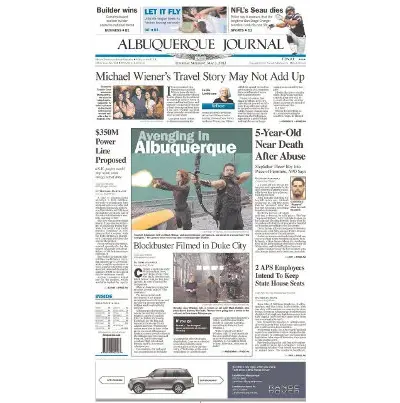
The Albuquerque Journal is the largest newspaper in the U.S. state of New Mexico.
