John Stuart Mill Quotes
When a thing is bought not for its use but for its costliness, cheapness is no recommendation. As Sismondi remarks, the consequence of cheapening articles of vanity, is not that less is expended on such things, but that the buyers substitute for the cheapened article some other which is more costly, or a more elaborate quality of the same thing; and as the inferior quality answered the purpose of vanity equally well when it was equally expensive, a tax on the article is really paid by nobody: it is a creation of public revenue by which nobody loses.
Mill, John Stuart. Principles of Political Economy. John W. Parker, 1848, Book V, ch. 6.


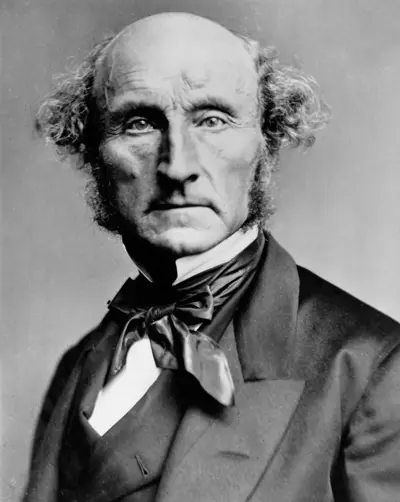
John Stuart Mill, usually cited as J. S. Mill, was an English philosopher, political economist, Member of Parliament, and civil servant. One of the most influential thinkers in the history of classical liberalism, he contributed widely to social theory, political theory, and political economy. Dubbed "the most influential English-speaking philosopher of the nineteenth century", he conceived of liberty as justifying the freedom of the individual in opposition to unlimited state and social control.
