Louis Antoine de Saint-Just Quotes
When a people, having become free, establish wise laws, their revolution is complete.
Louis Antoine de Saint-Just, 1767–1794, French Revolutionary Leader, 1792
Sourced by: Eigen's Political and Historical Quotations

He was committed to Irish freedom and independence but via politics and the law. Although he was very popular and attained much politically, there have always been Irishmen who felt violence was necessary and some who resorted to terrorism.


This Cahier was the consensus of the Clergy of Blois in 1789. There were cahiers of several provinces of France—some by the clergy, some by the nobles. What is fascinating is the emergence of many of the pre-revolutionary French concepts. The example of the American revolution and its principles was known throughout the educated classes of France.


Honore Gabriel Victor Requiti. The French King had just opened the French National Assembly which contained deputies (delegates) from the clergy, the nobility and the people. The King had made what some deputies thought was a very constructive and responsible speech opening the assembly. Mirabeau observed that as long as there was an absolute monarch in place, even a benign one. It was the presence of a monarch itself that was evil.


The glorious spectacle of eighteen millions of people, struggling to burst their chains and be free.
The entire speech was translated into Spanish and read to great applause to Latin American revolutionary regiments.


This is the earliest surviving attempt of the Romans to formulate a legal code.


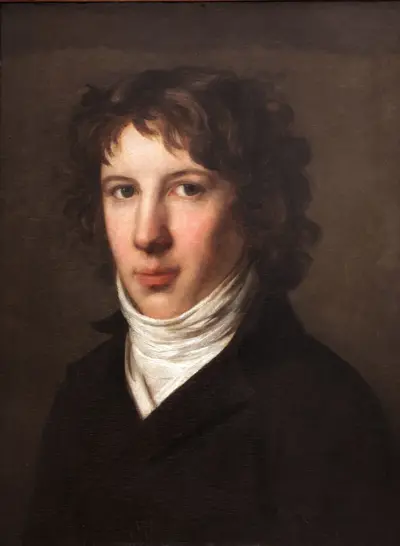
Louis Antoine Léon de Saint-Just was a Jacobin leader during the French Revolution. He was a close friend of Maximilien Robespierre and served as his most trusted ally during the period of Jacobin rule (1793–94) in the French First Republic. Saint-Just worked as a legislator and a military commissar, but he achieved a lasting reputation as the face of the Reign of Terror. He publicly delivered the condemnatory reports that emanated from Robespierre and the Committee of Public Safety and defended the use of violence against opponents of the government. He supervised the arrests of some of the most famous figures of the Revolution and saw many of them off to the guillotine. For his unyielding severity, later writers dubbed him the "Angel of Death".
