Benjamin N. Cardozo Quotes
Whatever is a privilege rather than a right, may be made dependent upon citizenship.
Benjamin N. Cardozo, 1870-1938, Supreme Court Justice, People v. Crane, 1915
Sourced by: Eigen's Political and Historical Quotations


It is ironic that Pakistan, the creation of Jinnah’s efforts, has to a great extent adopted Sharia (Islamic Law) resulting in severe curtailment of freedom of speech and thought. Professors languish in jail for not teaching the history of Muhammed in the orthodox way, people are sentenced to death for what the local mullahs regard as blasphemy—results which from Jinnah’s point of view were terrible.


When the slaves were emancipated, they were free but they were no yet citizens with civil and political rights either. They had no land or other property and racial discrimination in the ex-slave states was vicious and rampant.

He had been a Congressman before assuming the Presidency. Civil rights was a major subject of debate after the Civil War. One major issue was that of citizenship itself. Many contended that Americans were citizens of a state and dependant on the state for the protection of civil rights. However, the extent to which the Federal government could and should be the guarantor of citizenship issues was in dispute. Today with the issue settled in favor of Federal preeminence, it is hard to realize that this was very unsettled at one point in history. Garfield was one of those leading the effort for more Federal involvement and control.

The issue was could a person from another state come into New Jersey and dredge oysters with the same rights and privileges as a citizen of New Jersey? Washington said, no.


As a woman, Anthony was found guilty of “illegal voting” in the Presidential election of 1872. Fining her $100 the judge asked if she had anything to say. This was her reply.


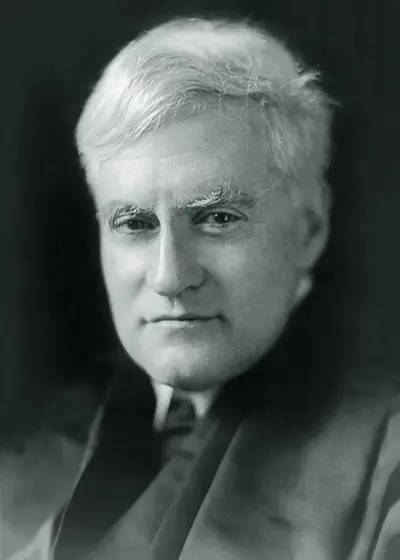
Benjamin Nathan Cardozo was an American jurist who served on the New York Court of Appeals and later as an Associate Justice of the Supreme Court. Cardozo is remembered for his significant influence on the development of American common law in the 20th century, in addition to his philosophy and vivid prose style. Cardozo served on the Supreme Court six years, from 1932 until his death in 1938. Many of his landmark decisions were delivered during his eighteen-year tenure on the New York Court of Appeals, the highest court of that state.
