Alan Greenspan Quotes
What we have found over the years in the marketplace is that derivatives have been an extraordinarily useful vehicle to transfer risk from those who shouldn't be taking it to those who are willing to and are capable of doing so.
Greenspan, Alan. Testimony before the Committee on Banking, Housing, and Urban Affairs, U.S. Senate, July 16, 2003.


It was the souped up nature of the credit default swaps that was in part responsible for the souped up melt down of the economy of 2008 and the great recession thereafter. A credit default swap is an insurance policy that a company will pay off its bonds and not go bankrupt. It is a cross between an insurance mechanism and a stock exchange type security mechanism and through heavy lobbying escaped any kind of regulation. It cost a company no money to write a credit default swap and they were paid to do so. As long as business and the economy was good, it was a terrific business but there was no way of ever knowing how much risk they were taking. So companies who wrote credit default swaps did not have to have the money to pay to back them up if they business was bad. When that happened in 2008 even the largest insurance company in the world collapsed because of the risk of having to pay the credit default swap and the U. S. Government had to take over the insurance company. In 2010, the Obama administration passed a financial reform bill that began to regulate credit default swaps.


Despite this warning, and the hundreds of billions of dollars of people’s money that was lost on derivatives, and recommendations for not allowing derivatives to bought or sold by institutions who invest the public’s money, derivatives were not outlawed by Congress in its efforts to reregulate the financial industry.


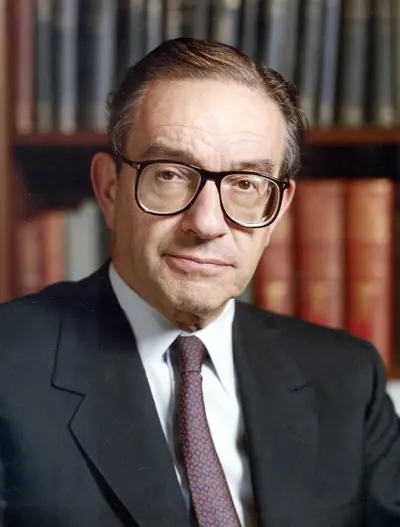
Alan Greenspan is an American economist who served five terms as the 13th Chair of the Federal Reserve of the United States from 1987 to 2006. He works as a private adviser and provides consulting for firms through his company, Greenspan Associates LLC. First appointed Federal Reserve chairman by President Ronald Reagan in August 1987, he was reappointed at successive four-year intervals until retiring on January 31, 2006, after the second-longest tenure in the position (behind William McChesney Martin).
