Benjamin Franklin Quotes
What vast additions to the conveniences and comforts of living might mankind have acquired, if the money spent in wars had been employed in works of public utility; what an extension of agriculture even to the tops of our mountains; what rivers rendered navigable, or joined by canals; what bridges, aqueducts, new roads, and other public works, edifices, and improvements might not have been obtained by spending those millions in doing good, which in the last war have been spent in doing mischief.
Franklin, Benjamin. "Letter to Sir Joseph Banks, 27 July 1783." The Writings of Benjamin Franklin, Vol. 9, edited by Albert Henry Smyth, Macmillan, 1907, p. 74.


Although Madison vetoed the Federal bill to improve the national infrastructure, he was very much for the improvements and he said so in this veto message. He, however, did not see the Constitutional authority for the Federal government to appropriate moneys to be spent in the States for infrastructure improvement. He was for a Constitutional Amendment to do so or to make the improvements using State money as New York did building the Erie Canal. Alexander Hamilton, and many of the Congressmen who voted for the bill disagreed (many of whom were also in the Constitutional Convention) and did not see the Constitutional limitation that Madison did. See Hamilton’s Quote 644278. He was particularly concerned that small and less affluent states could not possibly have the skill to design these or the finances to build them. Later President’s and Congresses sided with Hamilton. It would be hard to envision America today of Madison’s view had prevailed.


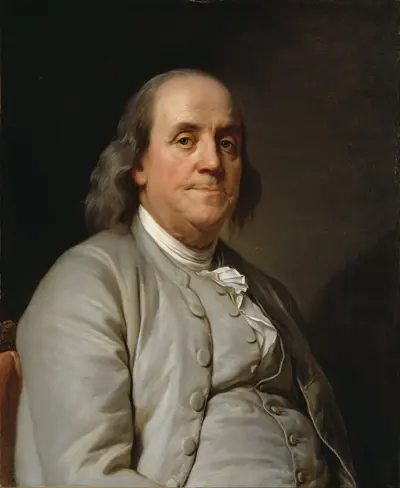
Benjamin Franklin FRS FRSA FRSE was one of the Founding Fathers of the United States. A polymath, he was a leading writer, printer, political philosopher, politician, Freemason, postmaster, scientist, inventor, humorist, civic activist, statesman, and diplomat. As a scientist, he was a major figure in the American Enlightenment and the history of physics for his discoveries and theories regarding electricity. As an inventor, he is known for the lightning rod, bifocals, and the Franklin stove, among other inventions. He founded many civic organizations, including the Library Company, Philadelphia's first fire department, and the University of Pennsylvania.
