Ruth Benedict Quotes
What really binds men together is their culture, the ideas and the standards they have in common.
Benedict, Ruth. Patterns of Culture. Houghton Mifflin, 1934, p. 16.


This mode of national definition is characteristic of many nations of Europe as well.


There are large areas of life and society in which all Arabs—especially in Saudi Arabia are expected to behave, believe, and think in certain ways. The modern Islamic religion governs behavior of all kinds and is very prescriptive. Everyone is expected to take it literally and behave accordingly. Individualism and even creativity except in prescribed areas is even regarded as sinful. Islam was not always such, and ironically when Christianity was in its Dark Ages and was even worse for the individual than Arab Islam today, the Muslims celebrated intellectual creativity and exploration of all ideas including those of the West. However, in the 12th century there was a “closing”—a narrowing of allowable Islamic thinking, and since then, Islamic people have had great difficulty with change or modernity. Not all Muslim nations are equally rigid but the Arabs are at the extreme among Islamic counties.


His belief is that the vast majority of Americans have a set of values in common including tolerance of alternative religions. In this sense, he considers the common values as an American Religion.

Note the belief that the author has the belief that over time homogeneity is important in a state, whereas the most successful modern states have been ones that are diverse—i.e. America, Britain, China, France. There have been some small successful states like Norway that are homogeneous, but large states need the heterogeneity.

Savarkar was a fascist-oriented, Hindu nationalist, who advocated a quasi Hindu theocracy and the relegation of Muslims to second class citizen status. See {641952}.


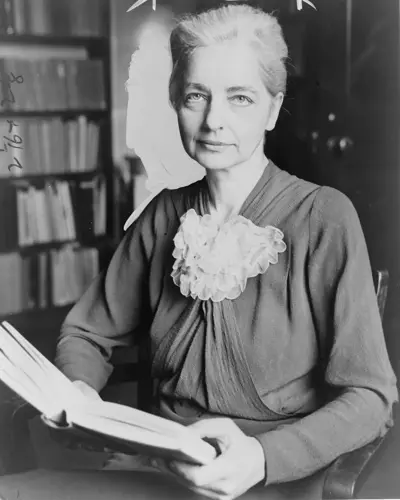
Ruth Fulton Benedict was an American anthropologist and folklorist.
