Richard Mentor Johnson Quotes
What other nations call religious toleration, we call religious rights. They are not exercised in virtue of governmental indulgence, but as rights, of which government cannot deprive any portion of citizens, however small.
Johnson, Richard Mentor. "Report of the Committee on the Post Office and Post Roads." Public Documents Printed by Order of the Senate of the United States, Second Session of the Twentieth Congress, vol. 1, doc. 46, Duff Green, 1829, p. 2.


Pen name: Jack Nipps. Leland was a Baptist evangelist who had worked with Thomas Jefferson and James Madison to secure Freedom of Conscience in Virginia. Many people think that ideas such as this are the views of irreligious men and women, but Leland was a devout, evangelical Baptist and Baptists suffered discrimination in early Colonial America. Freedom of conscience was essential for all religions who were not in the local majority. Tolerance essential. See 43,065.


Jinnah, although insisting on a Muslim state, was a modernist and assumed that there would be freedom of religion. To a certain extent he believed in separation of church and state. However, after his death Pakistan has moved ever further towards a strict adherence to Sharia and Islamic law.

Kelly Armstrong was a gay man who had committed no crime yet the Assistant Attorney General was following him about, going to his home and accusing him of promoting a “deviant” life style. Shirvell was fired from his job for violation of rules of behavior for law enforcement officers. Armstrong sued Shirvell for violating Michigan’s anti-stalking law. He agreed to drop the suit if Shirvell would apologize and stop stalking him. Shirvell refused. Then a Michigan jury awarded Armstrong $4.5 million in 2012.


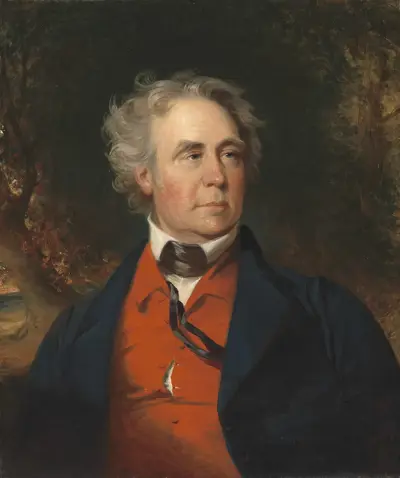
Richard Mentor Johnson was an American lawyer and politician who served as the ninth vice president of the United States, serving from 1837 to 1841 under President Martin Van Buren. He is the only vice president elected by the United States Senate under the provisions of the Twelfth Amendment. Johnson also represented Kentucky in the U.S. House of Representatives and Senate. He began and ended his political career in the Kentucky House of Representatives.
