J. L. Austin Quotes
"What is truth?" said jesting Pilate, and would not stay for an answer. Pilate was in advance of his time. For "truth" itself is an abstract noun, a camel, that is, of a logical construction, which cannot get past the eye even of a grammarian. We approach it cap and categories in hand: we ask ourselves whether Truth is a substance (the Truth, the Body of Knowledge), or a quality (something like the colour red, inhering in truths), or a relation ("correspondence"). But philosophers should take something more nearly their own size to strain at. What needs discussing rather is the use, or certain uses, of the word "true." In vino, possibly, "veritas," but in a sober symposium "verum."
Austin, J. L. "Truth." Philosophical Papers, edited by J. O. Urmson and G. J. Warnock, 3rd ed., Oxford University Press, 1979, p. 117.


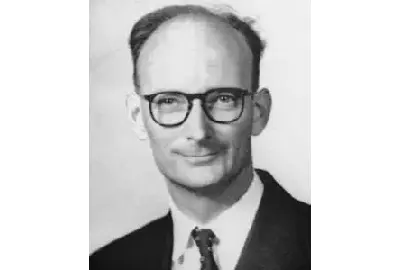
John Langshaw Austin was a British philosopher of language and leading proponent of ordinary language philosophy, perhaps best known for developing the theory of speech acts.
