Wilfrid Laurier Quotes
What is hateful is not rebellion but the despotism which induces the rebellion; what is hateful are not rebels but the men, who, having the enjoyment of power, do not discharge the duties of power; they are the men who, having the power to redress wrongs, refuse to listen to the petitioners that are sent to them; they are the men who, when they are asked for a loaf, give a stone.
Canada, Parliament, House of Commons. House of Commons Debates. 3rd Parliament, 1st Session, 15 Apr. 1874, p. 154.


Manava Dharma Shastra. This text is a part of the Hindu Holy Texts. Hindus believe that Manu was a prophet whose text is revealed or inspired.


Napoleon had been a great supporter of Napoleon, but had become disillusioned.


The basis of his complaint essentially was that he and his military and supports were no worse than the guys why they were killing and if they did not continue fighting and kikking, they themselves would be killed. While there was some truth to that, Assad was one of the worst dictators of the post WWII era. His indiscriminate shooting, shelling and air strikes on women & children, hospitls and schools, and the use of poison gas was enough to justify the image of him as a "bad guy".


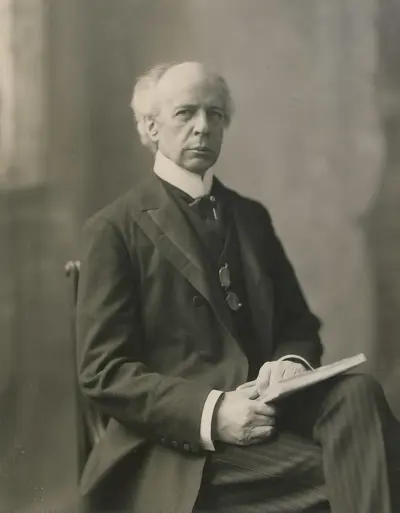
The second child of Carolus Laurier and Marcelle Martineau, Wilfrid Laurier was born in Saint-Lin, Canada East (modern day Saint-Lin-Laurentides, Quebec), on 20 November 1841. Laurier was among the seventh generation of his family in Canada. He was a sixth-generation Canadian. His ancestor François Cottineau, dit Champlaurier, came to Canada from Saint-Claud, France. He grew up in a family where politics was a staple of talk and debate. His father, an educated man having liberal ideas, enjoyed a certain degree of prestige about town. In addition to being a farmer and surveyor, he also occupied such sought-after positions as mayor, justice of the peace, militia lieutenant and school board member. At the age of 11, Wilfrid left home to study in New Glasgow, a neighbouring village largely inhabited by immigrants from Scotland. Over the next two years, he familiarized himself with the mentality, language and culture of British people. Laurier attended the Collège de L'Assomption and graduated in law from McGill University in 1864.
