F. Edward Hebert Quotes
What in the hell do you think they are doing down in the Eighth Naval District? They are pulling the flag down.
The flag analogy was naval slang for closing the base in Hebert’s district. Kennedy’s Defense Department had determined that it was a waste of money and was not needed for the military capability of the nation. Hebert, however was on the House Armed Services Committee. The next morning the Secretary of Defense called the congressman and the base closing was rescinded. Hebert was a general foe of any base closing whatsoever, but especially one in his district like this one.
Felix Edward Hebert, 1901-1979, U. S. Congressman (Democrat, LA), Statement to JFK at a White House clambake
Sourced by: Eigen's Political and Historical Quotations

History is replete with instances of military coups. In the final analysis, in every country at all times, there is no force in a society that could cope with a military which decides to act on its own. The Founding Fathers were very conscious of this reality and history, hence the firm civilian control of the military in America.

Holland was officially Napoleon’s ally, but he and the French military leaders were not satisfied with the military or logistical support they were getting from the Dutch. Field Marshal Marmont was sent to Holland to “improve” the situation. When one of his demands seemed excessive a delegation of leading Dutch politicians met with him and reminded him that Holland was a sovereign country and France military officers could not issue orders in Holland. This was his famous response.


Bailey became a lifelong enemy of the President’s as a result of this statement.
Miles, a hero of the Indian Campaigns (although he led the atrocities at the massacre at Wounded Knee) and then the leading military figure in America was an opponent of the policies of the new young President and had political aspirations of his own for the Presidency. Miles’ opinions were printed in the press. He maintained that he was not speaking as the Commanding General of the Army but personally as a citizen. The President surprised almost all by publicly scolding and reprimanding Miles when he next came to the White House. Five days later Roosevelt made the reprimand official, effectively ending Miles career. The issue of when senior military officers can criticize the administration has been debated ever since. Roosevelt was also a war hero himself, and although the military was shocked by such “savage” treatment of a senior officer, the President had public opinion on his side. Every decade or so there is a military official who does not care for the administration’s policies and expresses himself publicly. President Truman’s firing to General Douglas Macarthur was the most dramatic case, but Truman was well aware of the Miles and TR precedent.


The actress was in Jordan and was requested for a command performance before King Hussein. She was told to curtsey when she was introduced to the King.


She was the highest-ranking Black, female officer in the army.


“Krauts” was a derogatory term for Germans. The American GIs loved Mauldin’s cartoons. However, much of the humor was directed at the Officers who were not as enthusiastic about the cartoons. The War Department didn’t agree with Patton and other officers who wanted the Mauldin Cartoons censored. They had determined that the cartoons were terrific for morale, and hence they printed them and distributed them to our troops the world over. See {629515} for Mauldin’s view of Patton.


The President told McNamara that if the administration does not send the troops the Generals want, they will be blamed for any military failures that occur. If they do send all the troops that the Joint Chiefs wanted, they would be going far beyond the limits that the Defense Secretary recommended and the President would have preferred. JBJ felt he really had no political choice. He authorized the wanted troops further escalating the war. See his special assistant’s question about that decision in {617151}.

A fatwa is a legal / theological ruling or decision made by an Islamic legal expert. Many disagree with each other just as American legal opinions often disagree.
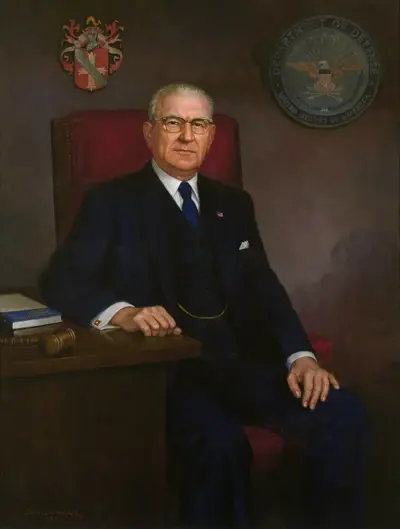
Felix Edward Hébert was an American journalist and congressman from Louisiana. He represented the New Orleans-based 1st congressional district as a Democrat for 18 consecutive terms, from 1941 until his retirement in 1977. He remains Louisiana's longest-serving U.S. representative.
