Slavoj Zizek Quotes
What if the Soviet intervention was a blessing in disguise? It saved the myth that if the Soviets were not to intervene, there would have been some flowering authentic democratic socialism and so on. I'm a little bit more of a pessimist there. I think that the Soviets - it's a very sad lesson - by their intervention, saved the myth.
Žižek, Slavoj, and Glyn Daly. Conversations with Žižek. Polity Press, 2004.


1st Viscountess Snowden. See Winston Churchill regarding the most famous use of the “iron curtain” phrase {411311}. She seems to have been an earlier user. The phrase " iron curtain" was used by T. St. Vincent Wallace Troubridge a few months earlier than Churchill. Also, it appears to have been used earlier than that by Nazi Propaganda Minister Joseph Goebbels in Das Reich {601664}. But George Washington Crile used the phrase in a political context in 1915 {598870}. And Viscountess Snowden used the phrase in her memoirs of a Past WWI trip to Russia {616546}. It is not known whether Troubridge or Churchill were familiar with any of these other works.
This was a big factor that made the Red Scare so damaging.


The Kuomintang nationalists under Chiang Kai-Shek tried to stay in power in China, but their corruption and incompetency at government lost them the support of most of the Chinese. The Chinese communists took over the government. The Nationalists then invaded the offshore island of Taiwan but claimed to be the rightful government of all of China. For many years they controlled the Chinese seat in the UN and they refused to recognize the fact that they had failed to gain the loyalty of the Chinese people.


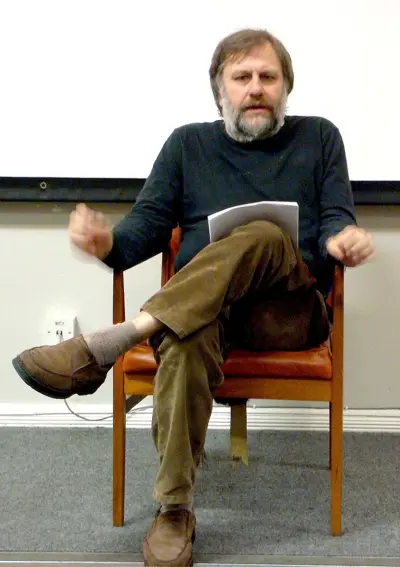
Slavoj Žižek is a Slovenian philosopher, a researcher at the Department of Philosophy of the University of Ljubljana Faculty of Arts and international director of the Birkbeck Institute for the Humanities of the University of London. He is also Global Eminent Scholar at Kyung Hee University in Seoul and Global Distinguished Professor of German at New York University. He works in subjects including continental philosophy, psychoanalysis, political theory, cultural studies, art criticism, film criticism, Marxism, Hegelianism and theology.
