Marcus Tullius Cicero Quotes
What greater or better gift can we offer the republic than to teach and instruct our youth?
[Lat., Quod enim munus reiplicae afferre majus, meliusve possumus, quam si docemus atque erudimus juventutem?]
Cicero, Marcus Tullius. De Senectute, De Amicitia, De Divinatione. Translated by W. A. Falconer, Harvard UP, 1923, p. 373.


This principle characterized most Islamic cultures for the next 400 years while Christian Europe was in the Dark Ages and had ignored most of the accumulated Western knowledge of the Greeks and Romans, The Muslims however, kept this knowledge alive and added to it supporting great mathematicians, scientists, philosophers, theologians and physicians. During the 12th century extreme fundamentalists gained control over Islam and this great principle of Umar’s was not only ignored but those who acquired new knowledge were persecuted as “innovators” often a capital crime. When Christian Europe began to rise intellectually, the Muslim societies were declining. Even today, the Islamic cultures are split as to the value of new knowledge and while there are modern Muslim scholars and scientists, there are still major forces throughout Islam who consider knowledge that is not in the Koran or which contradicts the Koran not only false, but heretical, often to be punished even by death.


See Diogenes for a similar sentiment

The President with Secretary of State, Thomas Jefferson, and several members of Congress, came to Brown to get ideas of how colleges should operate as there were very few colleges in America, and more were needed. Note the classic language of political flattery. Washington was really polished as “retail” politician as this quotation demonstrates.


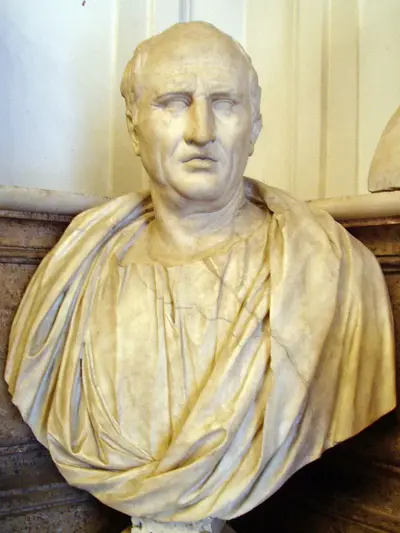
Marcus Tullius Cicero was a Roman statesman, orator, lawyer and philosopher, who served as consul in the year 63 BC. He came from a wealthy municipal family of the Roman equestrian order, and is considered one of Rome's greatest orators and prose stylists.
