Ethan Coen Quotes
We're not big on taste. And actually, if you don't pander to undue sensitivities, then it ends up usually not being much of a problem.
Coen, Ethan. Interview. The Coen Brothers: Interviews, edited by William Rodney Allen, University Press of Mississippi, 2006.


Marlette was inundated by complaints from Muslims for his 2002 cartoon depiction of Muhammad driving a Ryder rental truck like the one used by convicted Oklahoma City terrorist bomber, Timothy McVeigh. The caption was, “What would Muhammad drive?” He was front-page news in Saudi Arabia and other Islamic nations. He received death threats. The Council on American-Islamic Relations and the Muslim World League both demanded an apology. Marlette refused. When he was killed in an automobile crash in July of 2007, many Muslims believed that this was the retribution of Allah.

In September of 2005 a Danish Newspaper published some political cartoons showing the hypocrisy of some Muslims who use Islam to justify murder of innocents and terrorism. Months later, many in the Middle East protested vehemently and Muslim riots broke out because the Prophet Muhammad's visage was depicted against Islamic tradition. Many Muslim leaders claimed that insulting religion was an “abuse” of freedom of speech including those from nations which regularly publish material that is virulent against Christians and Jews.


This is a very important quotation. The reason is that the Secretary General of the UN backed off and did not support the absolute right of freedom of speech and expression. He favored allowing exceptions. In this case a film was made that was not only intellectually an attack on Islam but it was done in such a manner that most orthodox Muslims were insulted and offended that their Prophet and religion were both insulted in a blasphemous manner. It was a film that was very much in poor taste, insensitive and gross. One major difference between freedom of speech as interpreted by most countries and the United States is that most other nations do not allow and defend hate speech and material that insults a people or their religion or is blatantly blasphemous. The U. S. however protects anyone who blasphemously attacks anyone or any group for any reason. There are a few other nations that protect free speech absolutely but Germany, the United Kingdom, Israel, and India are considered major examples of democracy and freedom and yet they do not protect free speech absolutely. In most Muslim nations, whatever freedom of speech they might have does not apply to blasphemy where Islam is concerned. In most of the Arab nations, there is rank hypocrisy in that freedom of speech is tolerated and protected if there is a blasphemous attack on any other religion such as Christianity, Judaism, Buddhism, or Bhai. This kind of difference on human rights between the U. S. and the UN causes many Americans to oppose the US participation in UN operated courts and projects to protect human rights. Few Americans would favor being a part of an international court system where an American could be convicted of blasphemy for what he had written or said. Essentially, the Secretary General has taken a stand against the United States Constitution and the values of most Americans and many other people of the world like Denmark, or Norway. Offensive and insulting speech is the only kind of speech that needs protection. If speech offends no one, there is no need for its protection.


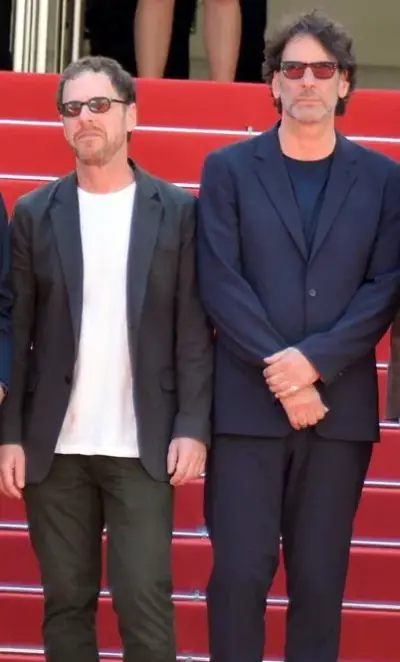
Joel Coen and Ethan Coen (born September 21, 1957), collectively referred to as the Coen Brothers (/ˈkoʊən/), are American film directors, producers, screenwriters, and editors. Their films span many genres and styles, which they frequently subvert or parody. Their most acclaimed works include: Raising Arizona (1987), Miller's Crossing (1990), Fargo (1996), The Big Lebowski (1998), O Brother, Where Art Thou? (2000), No Country for Old Men (2007), Burn After Reading (2008), A Serious Man (2009), True Grit (2010), Inside Llewyn Davis (2013), and The Ballad of Buster Scruggs (2018).
