Gray Davis Quotes
We're going to march on Washington with a host of Republicans, Democrats, business leaders, legislators.
Davis, Gray. Interview. Frontline: Blackout, PBS, 5 June 2001.

He started the first "march on Washington" in 1894. It was to protest unemployment.


Democratic Speaker of the Oklahoma House Jim Barker was so heavy-handed that his own party members combined to unseat him:

This is how she began one of her daily columns. She did not grow up in a political world and whenever she made an error or mistake, she simply said so and corrected it. Many politicians—American and Foreign—didn’t know what to make of this. Even today, where politicians exaggerate and are called on their errors rarely admit it. Most feel if they ever admit to being wrong, no one will trust what they day in the future. And that their political enemies will repeat their admission over and over to destroy their image with the public. Actiually that happened to Mrs. Roosevelt and even today opponents and enemies quote her errors which she corrected. However, she was not only one of America’s most popular politicians, but was one of the few that people would trust. Her words were trusted more so than even her husband’s, and he was the most popular President since George Washington.

Most people associate the phrase with the 1963 march in which Randolph was one of the organizers and leaders. However, he first used the term in 1941 threatening President Roosevelt with a protest march in the middle of WWII unless Roosevelt ordered the discrimination in defense industries and the military to cease. FDR and his administration did much to improve the situation but came far short of equality. Randolph organized the March on Washington Movement in 1941 and in negotiations throughout the war, this was his trump card. Progress was made but slowly. Randolph maneuvered a fine line as he wanted to do nothing to hurt the war effort. Some severely criticized Randolph’s tactics which were quite effective. Finally in 1963, 22 years after Randolph had first threatened such a march, it finally took place, leading to the Civil Rights Act of the following year. See {625657} for a Southern racist description of Ranolph’s techniques and his victories.

In 2011 nd 2012 a right wing extremist group—the Tea Party-were able to intimidate the Republican Congressional leadership to take the extreme partisan view that why would allow no significant legislation to pass as it might strengthen Democrat president Obama’s chances of getting reelected. Therefore there was to be no cooperation or even negotiations with the Democrats in Congress. Lugar a highly respected Republican Statesman, and expert on Foreign Affairs, followed his usual pattern of trying to develop legislation that would benefit the country. The Tea Party and some of the more partisan regular republicans then ran a candidate in the state primary election sending huge amounts of money to defeat Lugar who was a sure winner in the general election as he was very popular with all groups in Indiana ecept the right wing extremists, racists and fascists. Lugar never had the chance to win the election. He was defeated in the primary for working with Democrats.
Not all segments of the Republican Party perceived that they needed immigration reform. Some greatly feared more non-whites coming into the country and ending the traditional majority of whites. After the 1964 Civil Rights Bill was passed, almost all the racist Democrats of the “solid South” switched to the Republican Party and the last thing they want is to allow the 11 million mostly Hispanic and/or Black undocumented immigrants to become citizens and vote.


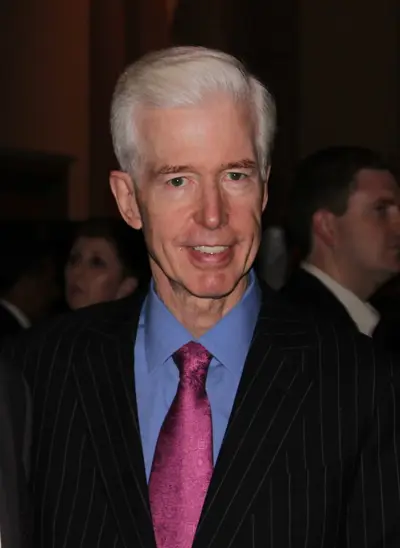
Joseph Graham "Gray" Davis Jr. is an American former attorney and politician who served as the 37th governor of California from 1999 to 2003. In 2003, only a few months into his second term, Davis was recalled and removed from office, the second state governor successfully recalled in U.S. history. Prior to serving as governor, Davis was chief of staff to Governor Jerry Brown (1975–81), a California State Assemblyman (1983–87), California State Controller (1987–95) and the 44th lieutenant governor of California (1995–99). Davis holds a B.A. in history from Stanford University and a J.D. from Columbia Law School. He was awarded a Bronze Star for his service as a captain in the Vietnam War.
