Henry A. Kissinger Quotes
We're at a moment when the international system is in a period of change like we haven't seen for several hundred years. In some parts of the world, the nation state, on which the existing international system was based, is either giving up its traditional aspects, like in Europe, or as in the Middle East, where it was never really fully established, it is no longer the defining element. So in those two parts of the world, there is tremendous adjustment in traditional concepts.
Kissinger, Henry. Interview with Robert Siegel. All Things Considered, NPR, 9 Sept. 2014.


Many of his colleagues were concerned that there were relative power changes in the world and argued that no change should be tolerated by England. However, change is always in process although often it is not noticed until it has advanced and changed the balance of power. The rise of China, India and Brazil in the beginning of the 21st century are an example.

Terrorism even then put strains on traditional diplomacy where bombers would take sanctuary or raise money in countries whose diplomatic policy was opposed to terrorism of all types. At this particular time, Irish terrorists would raise money in the United States to support the terrorists bombing English targets.


At the time, the major European countries were in a competitive scramble for colonies in Africa—so much so that there were very few independent territories left. The maps and borders of Africa were really decided by the Europeans.


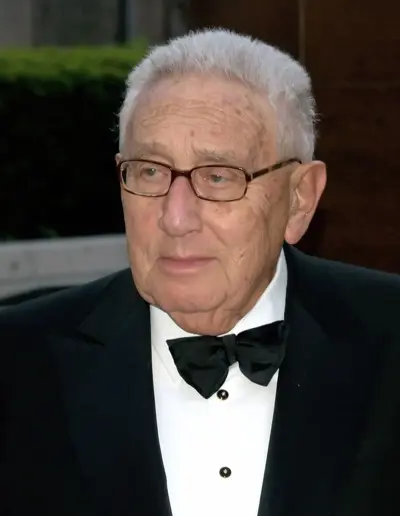
Henry Alfred Kissinger KCMG is an American politician, diplomat, and geopolitical consultant who served as United States Secretary of State and National Security Advisor under the presidential administrations of Richard Nixon and Gerald Ford. A Jewish refugee who fled Nazi Germany with his family in 1938, he became National Security Advisor in 1969 and U.S. Secretary of State in 1973. For his actions negotiating a ceasefire in Vietnam, Kissinger received the 1973 Nobel Peace Prize under controversial circumstances, with two members of the committee resigning in protest.
