Hillary Clinton Quotes
Well, I will be a president for Democrats, Republicans and independents, for the struggling, the striving, the successful, for all those who vote for me and for those who don't. For all Americans together.
Clinton, Hillary. "Address Accepting the Presidential Nomination at the Democratic National Convention in Philadelphia." The American Presidency Project, 28 July 2016.


Speech from the House Chamber of the Texas Capitol after the Supreme Court had ruled 5 to 4 that his opponent, who had won the popular vote, could not do hand counts on contested ballots. He was trying to unify a very divided country. The statement did much to that end.

Theodore Roosevelt was the Presidential nominee


In the local and congressional elections of 1918, the boss of New York's Tammany Hall placed restrictions on how political opponents could be attacked, while backing a fusion ticket:

The first Native American to become a General Officer. Appointed by President Grant in 1869. When Lee arrived there were many Black troops and he mistook General Parker for a Negro but then apologized saying that “I am glad to see one real American here.” This was Parker’s reply.


At the time sectionalism was extensive in America. Most Iowa and Northern families still remembered a relative who had been “killed by the rebels” in the Civil War. The South still resented the rest of the country. The East and Midwest had much better educated than the rest of the country. Most important, there was very little contact between Americans of different sections. Until the great Eisenhower initiative of a National Highway System sectionalism was common. Presidents were constantly trying to develop a national American spirit.
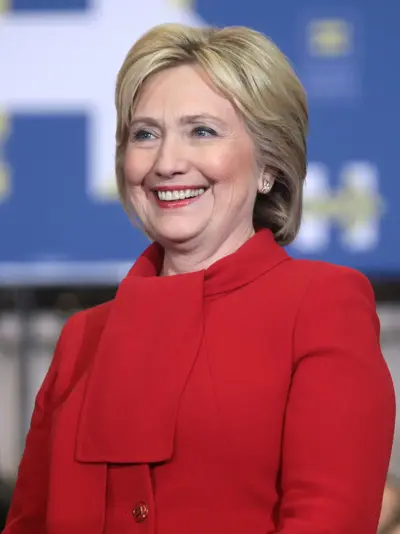
Hillary Diane Rodham Clinton is an American politician, diplomat, lawyer, writer, and public speaker who served as the 67th United States secretary of state from 2009 to 2013, as a United States senator from New York from 2001 to 2009, and as First Lady of the United States from 1993 to 2001. Clinton became the first woman to be nominated for president of the United States by a major political party when she won the Democratic Party nomination in 2016. She was the first woman to win the popular vote in an American presidential election; however, she failed to win the Electoral College.
