Larry Elder Quotes
Welfare distorts behavior, makes one less personally responsible and reduces the role of private charity. This principle applies to corporate welfare.
Elder, Larry. The Ten Things You Can't Say in America. St. Martin's Press, 2000.


Mormons have been divided on this issue. Many Mormons do accept welfare, and government subsidies for agriculture and other business corporate welfare and some hold with Benson’s view and would not accept for example agricultural subsidies for not growing crops. Ironically, Benson, as the Secretary of Agriculture, presided over the nation’s largest give-away program for not working: agricultural subsidies. However, this statement was made after his government service and was made as President of the Mormon Church.
The “folks” were private corporations want to run schools and have won some contracts to operate Charter Schools. They argue that the free market should prevail when it comes to education and schools should not necessarily be run by local governments. Corporations should be given a chance in a “free market.” However, as Molnar observes, there is more than a little hypocrisy in the these educational corporations totally depend on public, tax dollars for the existence. Ironically, there is a sound market for elite private schools which are in a free market which are funded with private money. However, these educational corporations have chosen NOT to compete in this private arena. They only want public money. Critics argue that they are not very good at operating schools but are quite skilled at politically obtaining taxpayer money. So far there is no data from objective studies which shows that these educational corporations can operate better or less expensive schools.
While Murphy may have believe this, his company would profit immensely of Chrysler would fail. 28 years later it was General Motors that required the bailout that was much larger than the Chrysler one. The GM executives had gotten over their philosophical objections.

This point of of view is actually held by a significant number of conservative Americans. They believe that welfare actually causes the inability of the very poor to get ahead. However, almost no people who have been recipients of welfare, including those who not only emerged from poverty but became wealthy and distinguished, agreed with them. The Congressman was silent about all the companies and wealthy individuals who regularly take corporate welfare and subsidies from the government and who do not seem to be negatively affected.


Referring to the Price-Anderson Act which limits the liability of corporations in nuclear accidents regardless of the extent of their negligence:
Referring to large corporations receiving substantial tax advantages and other subsidies:
The 7 percent was the interest students had to pay for the Federal Student Loan Program. The banks in contrast were able to obtain money at the Federal Reserve Bank Discount Window at no interest cost. Draut was one of those in the Occupy Wall Street Movement who could not understand why the government provided so much help to the banks relative to that given to students and most other segments of society. Draut, and other protestors, not only thought that the differential favoritism to the banks was unfair, but unjust in the sense that in substantial part the Meltdown of 2008 was the fault of the banks while the students and most of the other elements of American society were the victims. Both the George W. Bush and Obama administrations believed that even though the banks may have been irresponsible and the cause of much of the economic dilemma of the nation, if the banks would be allowed to fail, the Great Recession would have become a major depression and the suffering of the entire country would have been magnified many times, so Wall Street and the banks were bailed out to stave off a much worse economic disaster. It was clearly unfair and unjust, but generally perceived to have been necessary by the politicians and economists.
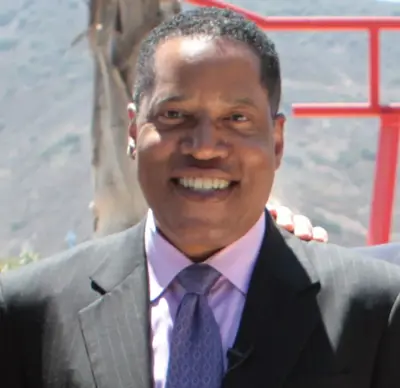
Laurence Allen Elder is an American conservative talk radio host, author, attorney, and documentary filmmaker who hosts The Larry Elder Show. The show began as a local program on Los Angeles radio station KABC in 1993 and ran until 2008, followed by a second run on KABC from 2010 to 2014. The show is nationally syndicated, first through ABC Radio Networks from 2002 to 2007 and Salem Media Group since 2015. Elder has also written nonfiction books and a nationally syndicated column through Creators Syndicate.
