Ruhollah Khomeini Quotes
Weapons in our hands are used to realize divine and Islamic aspirations.
Ruhollah Khomeini, 1900-1989, Iranian Cleric [Ayatollah] & Revolutionary Leader, Stated in 1982, Quoted in Robin Wright, Sacred Rage, 1985
Sourced by: Eigen's Political and Historical Quotations


The Sunna and Hadith are Islamic Reverential Texts. The “final battle” is prophesised just as in the Christian Book of Revelations such a final battle between good and evil is predicted (Armageddon), and is believed to be in the future by some fundamentalist Christians. One difference however is that a small population of Christians believe this literally, while most Muslims believe in the great battle to come. However in this case, the battle is between the Muslims and the evil heretics—all others.

The Manual was found by the Manchester (England) Metropolitan Police during a search of an Al Qaida member's home.

This sura is interpreted in two ways. For many modern Muslims it means that in discussions and debates on religion with non-Muslims, do not back off, and if you do it is a religious transgression. Defend the faith. For the fundamentalists and extremists, they interpret the same sura in physical warlike terms. So if there is a fight or battle with disbelievers, retreating from the battlefield is not only cowardice and perhaps a crime under military regulations as it is in the West, but it is in Christian terms a mortal sin for which there one will go to hell. So the most religious of Muslims will fight to the death using this sura as their guidance. On the other hand, Muhammad himself as the military and civil leader of Islam made strategic retreats. In the history of almost all warfare between the West and Muslims—especially the Arabs—courage on the battlefield has been lacking and the Israelis, British, French, Americans, and Hindus of India all observe this military weakness and accounting for this is built into their military doctrine.

See {586041} for a Koranic quotation that urges world domination by Islam. In this quotation, The Prophet was talking to his followers at a time when Islam was not even a dominant religion in Arabia. And war was the way in which tribes, groups, and religions and sects, established themselves and grew. Although there are other Koranic passages which tell the faithful that people can only legitimately come to Islam through individual commitment and willingly, this passage not only seems to contradict that but also reflects a desire to punish and disgrace “non-believing” groups. This vengeance motif is also contradictory to much else of the Koran which generally preaches love, forgiveness, and understanding. However, there are contradictions and intellectual inconsistencies within the Koran just as there are within the Old and New Testaments.
See {586039} for a quotation that goes further and seeks to punish and humiliate the non believers. This sura is often used by those wishing to illustrate the intolerance of Islam—especially of other religions. They fail to put this into the context of the Old Testament which proscribed death for heretics or the history of Christianity regarding the murder of nonbelievers. The difference is however, that a very small proportion of Jews or Christians today believe in following Biblical instructions in this respect while the proportion of Muslims who believe in the literal interpretation of scripture on these points is much larger. However there are Islamic modernists and moderates throughout the world who reject this notion of warring on all other religions and there is a struggle going on within Islam itself.
This is a common perception of many Islamic authorities—that the ancient Jews and early Christians would have clearly become Muslims had they but been exposed to the teaching of the Prophet. As egocentric as this sounds, Martin Luther believed that all reasonable Jews would become Christians.
Religious obligation of Islam requires all Muslims to try and convert all others. However that is not different from some of the Christian, fundamentalist religions where attempted conversion of non-believers is a duty. However, where many in the Islamic world see that obligation as a peaceful, nonviolent, effort to persuade others to accept Islam, there are many others who believe that Jihad should impose Islamic law—Sharia—upon the world and the use of force and violence is not only acceptable but is necessary and desirable to achieve their objection.

Collection of Spoken Words of the Prophet

The Manual was found by the Manchester (England) Metropolitan Police during a search of an Al Qaida member's home.

Some Muslims claim that Jihad really means a struggle that does not necessarily involve weapons, killing, and may be directed at mastery of self and social improvements in a society. However, the majority of Muslims in the world seem to accept the description given be Assam. In 1989 Assam was fomenting his extremist view of Islam in Pakistan where he had his headquarters when a bomb blew up killing Azzam and his two sons. It is not known whether it was an accident with the explosives they were storing for terrorist activities or they were killed by another Islam faction. Sunni and Shiite are often at each other’s throats.


Historically, this quotation shows that the negative relationship between the West and Islam and negative views of Islam was not a new phenomenon at the beginning of the 21st century. It existed long before, and as with the 21st century concerns, violence and war were the major concerns.


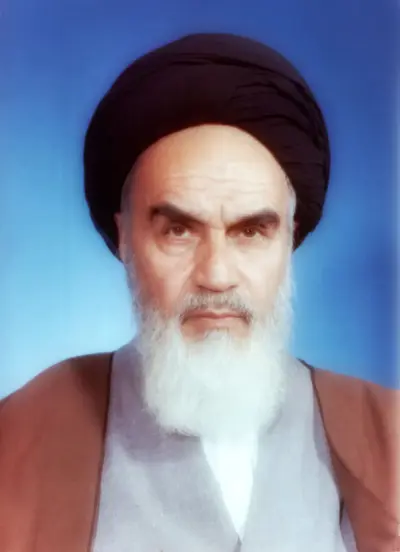
Sayyid Ruhollah Musavi Khomeini, also known in the Western world as Ayatollah Khomeini, was an Iranian political and religious leader. He was the founder of the Islamic Republic of Iran and the leader of the 1979 Iranian Revolution, which saw the overthrow of the last Shah of Iran, Mohammad Reza Pahlavi, and the end of the 2,500-year-old Persian monarchy. Following the revolution, Khomeini became the country's Supreme Leader, a position created in the constitution of the Islamic Republic as the highest-ranking political and religious authority of the nation, which he held until his death. Most of his reign was taken up by the Iran–Iraq War of 1980–1988. He was succeeded by Ali Khamenei on 4 June 1989.
