Daniel Webster Quotes
We wish that this column, rising towards heaven among the pointed spires of so many temples dedicated to God, may contribute also to produce in all minds a pious feeling of dependence and gratitude. We wish, finally, that the last object to the sight of him who leaves his native shore, and the first to gladden his who revisits it, may be something which shall remind him of the liberty and the glory of his country. Let it rise! let it rise, till it meet the sun in his coming; let the earliest light of the morning gild it, and the parting day linger and play on its summit!
Webster, Daniel. "The Bunker Hill Monument." The Works of Daniel Webster, Vol. 1, Charles C. Little and James Brown, 1851, p. 62.


Belrin had actually written an earlier version during World War I


At the height of his professional career, this Hall of Famer enlisted in the WWII Navy and was an anti-aircraft gunner and fought in the Pacific.


He was reacting to the protest of professional football player Colin Kaepernick—Quote 643305. Instead of standing and saluting as professional athletes have done for decades before games, Kaepernick had kneeled and refused to stand as a protest about the large number of unarmed Black young men who had been killed by police. . This caused great public criticism but also some initial support. Athletes who did this were potentially risking their multimillion dollar salary as this technically violated their contract to avoid anything embarrassing to the team. He also donated $1 million to programs in the area that were working to enhance Black/white understanding. Even those who disagreed with his choice of protest defended his right to do so, and after the initial furor, public opinion, while not in agreement about his method, tended to support him for having the courage of his convictions and using his celebrity for a worthy cause. Barnett was critical without appearing to denigrate the cause for which Kaepernick had protested or his right to protest.
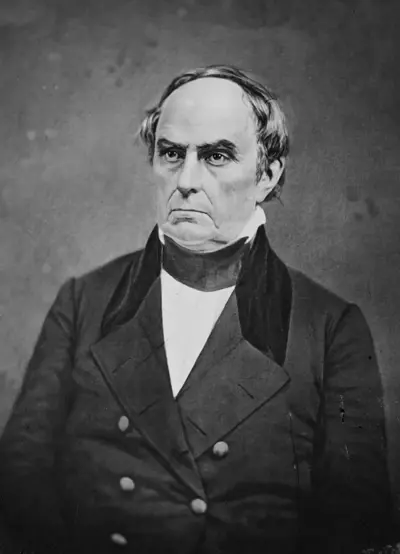
Daniel Webster was an American lawyer and statesman who represented New Hampshire and Massachusetts in the U.S. Congress and served as the U.S. Secretary of State under Presidents William Henry Harrison, John Tyler, and Millard Fillmore. As one of the most prominent American lawyers of the 19th century, he argued over 200 cases before the U.S. Supreme Court between 1814 and his death in 1852. During his life, he was a member of the Federalist Party, the National Republican Party, and the Whig Party.
