Helen Keller Quotes
We still have it in our power to rise above the fears, imagined and real, and to shoulder the great burdens which destiny has placed upon us, not for our country alone, but for the benefit of all the world. That is the only destiny worthy of America.
Keller, Helen. Let Us Have Faith. Doubleday, Doran & Company, 1940.

This quotation is particularly ironic in that President George W. Bush’s staff well recognized and appreciated the importance of the American President’s world role. However, that President and his administration became the most world despised American President since America became a world power late in the 19th century.


Ataturk was a young major at the time commanding troops of a weak and corrupt Ottoman regime. However a combined English and French (the strongest military powers in Europe) invasion of the Gallipoli Peninsula threatened to capture the Turkish capital, Constantinople. Ataturk alone rallied the Turkish defenders and fought the invaders to a standoff in long drawn out battle with huge casualties on both sides. Ataturk became a national hero. Although Ataturk thereafter was very reluctant to use military force or endanger troops, the thing he always thought worth the supreme sacrifice (including his own) was the independence and sovereignty of the nation. See {584502} for his continuing belief in this type of sacrifice.


LBJ was depressed and thinking of not running for re-election.

Eden was then Foreign Secretary.


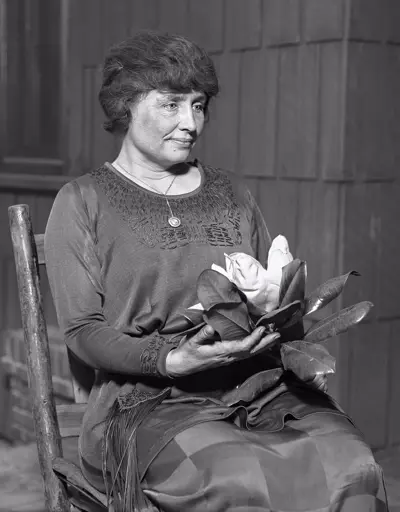
Helen Adams Keller was an American author, disability rights advocate, political activist and lecturer. Born in West Tuscumbia, Alabama, she lost her sight and hearing after a bout of illness at the age of nineteen months. She then communicated primarily using home signs until the age of seven when she met her first teacher and life-long companion Anne Sullivan, who taught her language, including reading and writing; Sullivan's first lessons involved spelling words on Keller's hand to show her the names of objects around her. She also learned how to speak and to understand other people's speech using the Tadoma method. After an education at both specialist and mainstream schools, she attended Radcliffe College of Harvard University and became the first deafblind person to earn a Bachelor of Arts degree. She worked for the American Foundation for the Blind (AFB) from 1924 until 1968, during which time she toured the United States and traveled to 39 countries around the globe advocating for those with vision loss.
