John Page Quotes
We shall be inconsistent with ourselves if, after boasting of having opened an asylum for the oppressed of all nations … we make the terms of admission to the full enjoyment of that asylum so hard as is now proposed.
Congress was debating the Naturalization Act of 1790. Page and many others (see {616324}) argued that there should be no qualification requirements on immigrants as every person coming to America added to the strength of the nation. Congress reached a compromise between those who favored unlimited naturalization and citizenship and those who wanted heavy restrictions. It required a 2 year residence, a certification of good character and an oath, modest by modern standards.
John Page, 1743-1808, U. S. Congressman (Democratic Republican, VA), Governor of Virginia, Debate, House of Representatives, February 3, 1790
Sourced by: Eigen's Political and Historical Quotations

Congress was debating the Naturalization Act of 1790. Laurance and many others (see {616376}) argued that there should be no qualification requirements on immigrants as every person coming to America added to the strength of the nation. Congress reached a compromise between those who favored unlimited naturalization and citizenship and those who wanted heavy restrictions. It required a 2 year residence, a certification of good character and an oath, modest by modern standards.


At the time immigrants had to live in America 14 years before they were eligible for citizenship. The President urged a reduction in that waiting period which is what was done. This was one of the earliest statements of America as a haven to the oppressed of the world. Note that despite occasional squabbles over land use and theft, the general assessment of the President and the public was that the Indians although not as civilized had welcomed the whites with “hospitality.” The next years would produce the conflict for land and begin the massive usurpation of Indian land that would characterize American policy and practice until the latter half of the 20th century, buy which time there was little Indian land left.


“Service” referred to what was then the 7 year time of apprenticeship that a typical American apprentice was required to work for a master tradesman before he was given colonial citizenship and allowed to trade for himself. Under the bill that was passed anyone could come to the British American colonies (except Jews) by taking an oath of allegiance and paying a small fee. Holland and some thought that it discriminated against those apprentices who had come before and apprenticed themselves thus “playing by the rules.” Ever since, immigration and citizenship debates have faced the tension between the need for labor in America and the fairness to the people who had followed the earlier existing rules restricting immigration.


Most immigration reformers want to open immigration more widely. Ward wanted immigration restricted to certain ethnicities and limited.


1st Baron Verulam. Bacon credited the Roman’s ability to absorb different people’s into the empire as a key to their success and argued that this was a critical practice if a nation would become an empire.

I was born here. My children were born here. What the hell do I have to do to be called an American?
A Boston newspaper referred to Kennedy as "an Irishman." Until the latter part of the 20th century, there was an ugly, anti-Irish dimension to the national scene that was every bit as ugly as the other ethnic hatreds like anti-Semitism. The Irish like the early Jews had six strikes against them. They were foreigners. They were not Christian Protestants, they were poor, they did not know the American culture, they spoke English with a distinct accent, and they were the lowest of the lower classes. Even rich Irish like Kennedy were looked down upon and when his son ran for President he had to overcome a still significant block of anti-Irish Americans.

France had been hit with repeated riots of Muslim and African French citizens and immigrants. Thousands of cars were burned, property damaged and violence of the protesters had injured and killed bystanders. The major complaint was that they were not really accepted as equals in French society. Chirac tried to calm the rioters and prevent a backlash. Although France was a pioneering country in acceptance and tolerance of people of different races and religions, there has always been a strong intolerant segment of French Society that were racist, anti-Semitic and Fascist leaning. Because of the French concept of equality, affirmative action was not legally possible in France so that there was heavy discrimination and even segregation in housing, schools, occupations, and socially. Further, one of the traditional expectations of all immigrants who become French is that they adopt the French language and culture. Like immigrants throughout the world at the end of the 20th century, French immigrants often wanted to maintain their own customs, culture and language—a practice which set them at odds even with otherwise nondiscriminatory Frenchmen and women.
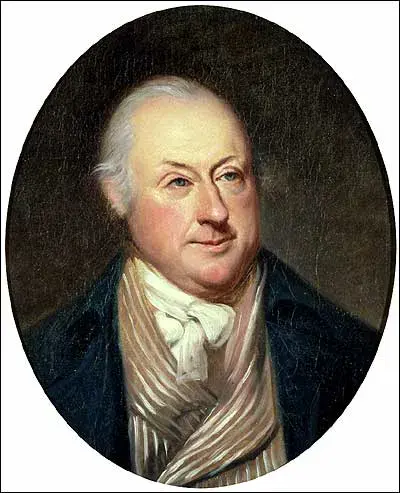
- Born: April 28, 1743
- Died: October 11, 1808
- Nationality:
- Profession:
John Page was a figure in early United States history. He served in the U.S. Congress and as the 13th Governor of Virginia.
