Thomas Paine Quotes
We ought therefore to suspect that a great mass of information respecting the Bible, and the introduction of it into the world, has been suppressed by the united tyranny of Church and State, for the purpose of keeping people in ignorance, and which ought to be known.
Paine, Thomas. The Age of Reason: Part the Second. H.D. Symonds, 1795.

First Astronomy, then Geology, proved that the Creation that was described in the Bible was not literally correct. To religious fundamentalists who believe that every word of the Bible is the word of God or the word of those inspired by God, the only possibility of conclusion is that the science is wrong. To the extent that undermining the word of God is not acceptable to the fundamentalists, they have used every power—including the criminal law power of the state to stop the blasphemy and discredit the scientist. In 1856, there was a much larger proportion of fundamentalists in the Western World than there is today. By 2012, the vast majority of these same populations have rejected Christian Biblical Fundamentalism, and no longer attack science for its affect on religion. The minority of fundamentalists, however, are vehement in their opposition to science.


Since all of God’s Truth was in the Bible, any other book was at best unnecessary and at worst blasphemous. The German practice of book burning seems to have started here in Munster. The exact same logic was used by Islamic Caliph Omar I in deciding to burn the great Library of Alexandria. See {627584}


The classic dilemma is that religious moderates and scientists do not argue to force everyone to follow the dictates of science, but in almost all societies and nations, religious fundamentalists strive to force their beliefs on all and make disagreement illegal.


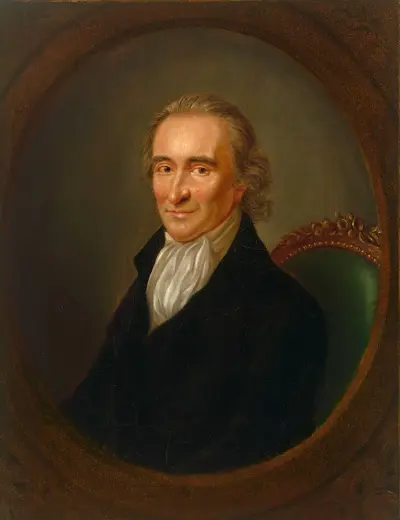
Thomas Paine was an English-born American political activist, philosopher, political theorist, and revolutionary. He authored Common Sense (1776) and The American Crisis (1776–1783), the two most influential pamphlets at the start of the American Revolution, and helped inspire the patriots in 1776 to declare independence from Great Britain. His ideas reflected Enlightenment-era ideals of transnational human rights. Historian Saul K. Padover described him as "a corsetmaker by trade, a journalist by profession, and a propagandist by inclination".
