Wole Soyinka Quotes
We Nigerians must reclaim our sovereignty, our civic entitlements.
Soyinka, Wole. Press Statement on Occupy Nigeria Protest. Jan. 2012.


In 2016 there was a military coup and Erdogan was in danger of losing control and beoing ousted. However, he made this plea to his supporters amont the citizenry, and they, including many from the military, put down the coup.


Akhito, then a very young man, had been under the tutelage of imperial and military men chosen for the task. Their racism and conviction of Japanese innate superiority persists to this day among many of the Japanese right.


See {640102} and {640101} for his view of what a nation is not.


This statement was more than a proverb but a popular political doctrine as well which had for years destabilized the Balkans. From the Serbian point of view, if a Serbian family moved to Bosnia or another country, their family land and their decedents were Serbian and under the governance of Serbia. Where there were enclaves of Serbs, they and the Serbian Government considered that land Serbian. This attitude even widely prevailed into the 21st century and led to the U. S. War with Serbia over the Serbian attempts to control parts of neighboring countries where Serbs were in the minority. The Serbs were not unique in this respect. Germany, in WWI, had seized territory from France because there were large enclaves of Ethnic Germans in the Sudetenland. The Ancient Romans likewise asserted the protection of Roman Citizens anywhere in the known world.


What is particularly interesting about this quotation is that at the time, this was a common concern by political and social thinkers of the West. Here however, we learn that there was apparently the same concern and problem ongoing in the Muslim Middle East.
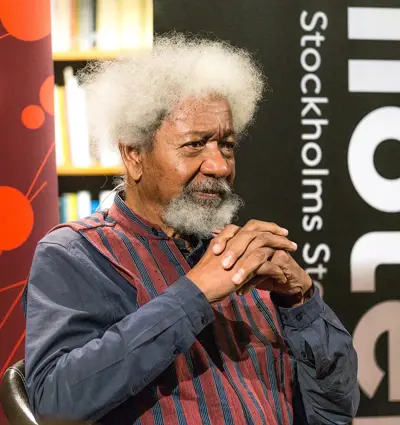
Akinwande Oluwole Babatunde Soyinka, known as Wole Soyinka (pronounced [wɔlé ʃójĩnká]), is a Nigerian playwright, novelist, poet, and essayist in the English language. He was awarded the 1986 Nobel Prize in Literature, the first sub-Saharan African to be honoured in that category. Soyinka was born into a Yoruba family in Abeokuta. In 1954, he attended Government College in Ibadan, and subsequently University College Ibadan and the University of Leeds in England. After studying in Nigeria and the UK, he worked with the Royal Court Theatre in London. He went on to write plays that were produced in both countries, in theatres and on radio. He took an active role in Nigeria's political history and its struggle for independence from Great Britain. In 1965, he seized the Western Nigeria Broadcasting Service studio and broadcast a demand for the cancellation of the Western Nigeria Regional Elections. In 1967, during the Nigerian Civil War, he was arrested by the federal government of General Yakubu Gowon and put in solitary confinement for two years.
