George Washington Quotes
We must take care always to keep ourselves, by suitable establishments, in a respectable defensive posture.
Washington, George. "Farewell Address, 19 September 1796." The Papers of George Washington, Presidential Series, vol. 20, edited by David R. Hoth and William M. Ferraro, University of Virginia Press, 2019, p. 717.


He was referring to the United States fighting against Al Qaeda and the Taliban in Afghanistan and Pakistan to keep Al Qaeda from attacking the United States easily.

This is a very important quotation in that there are some who believed—then and now—narrowly that self defense is limited to responding to only physical attacks on the United States per se. Kellogg made it clear that it includes attacks on the United States and any of its possessions. Most important it allows response to any “danger” to the United States. By this definition, for example, if Saddam had been developing weapons of mass destruction in the Iraq war, the pre-emptive attack would have been self-defense. Since the claim of weapons development was bogus, it was not self defense. The key variable a reasonable danger. Nations determine that by what others do and say. In 2011, if Iran were developing nuclear weapons the U. S. could attack as an act of self defense because the Iranian highest level officials have called for “death to the United States”. When they just had the intention to harm us, there was no danger. But when they add the means to harm us to the intention, that is a danger. Likewise other nations may act in self defense if a potential enemy threatens to endanger them and has the means to carry out the threats or desires.


Plan Orange was the code name of the united states plan for possible war with Japan. In this ironic quotation, American military planners realized five years before Pearl Harbor that surprise attack was the major vulnerability. We were surprised and had no help from our intelligence service which despite the recommendations was almost nonexistent.


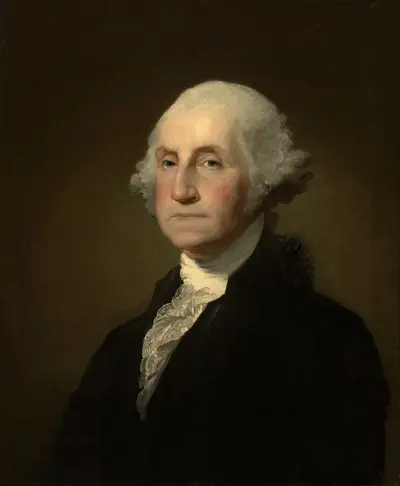
George Washington was the first President of the United States (1789-97), the Commander-in-Chief of the Continental Army during the American Revolutionary War, and one of the Founding Fathers of the United States. He presided over the convention that drafted the current United States Constitution and during his lifetime was called the "father of his country".
