Paul Robeson Quotes
We must join with the tens of millions all over the world who see in peace our most sacred responsibility.
Robeson, Paul. Here I Stand. Beacon Press, 1988, p. 119.


MacArthur wanted to widen the Korean war and use nuclear weapons against Communist China, after erroneously assuring Truman and other American leaders that his tactics in North Korea would not cause Chinese troops to enter the war. MacArthur would not obey the orders of the civilian government and was thus fired.


1st Baronet Hart. The Customs Duty was a major revenue source for governments of the day. China, had such a history and culture of corruption, especially around customs, that the Empress Cixi, to the distress of many of her own people, appointed Hart to oversee the entire customs operations. The yield amazed all, and opposition to Hart evaporated except from the officials who could no longer profit as before. Hart served in this position for 47 years.

Actually drafted by Secretary of State, John Foster Dulles


Historically, this quotation seems like an endorsement of motherhood, but it was an extremely important statement at the time. Eisenhower was convinced to run for the Presidency as a Republican in order to stop Senator Robert Taft and the conservative, isolationist, right wing of the Republican Party. These Republicans opposed American support of the United Nations. Eisenhower won the Republican nomination, then the general election, and clearly announced to the country and the world, that the moderate wing of the Republican Party was in control and the United Nations was an important part of our foreign policy.

Such a proposal was first made in America in 1792. See Benjamin Banneker.
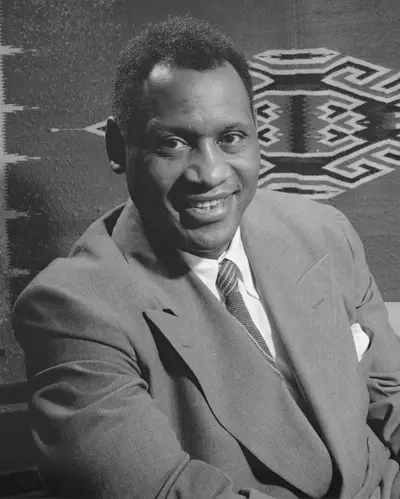
Paul Leroy Robeson was an American bass baritone concert artist and stage and film actor who became famous both for his cultural accomplishments and for his political activism. Educated at Rutgers College and Columbia University, he was a star athlete in his youth. He also studied Swahili and phonetics at the School of Oriental and African Studies in London in 1934. His political activities began with his involvement with unemployed workers and anti-imperialist students whom he met in Britain and continued with support for the Republican cause in the Spanish Civil War and his opposition to fascism. In the United States he became active in the Civil Rights Movement and other social justice campaigns. His sympathies for the Soviet Union and for communism, and his criticism of the United States government and its foreign policies, caused him to be blacklisted during the McCarthy era.
