Swami Vivekananda Quotes
We may convert every house in the country into a charity asylum, we may fill the land with hospitals, but the misery of man will still continue to exist until man's character changes.
Vivekananda, Swami. The Complete Works of Swami Vivekananda. Vol. 1, Advaita Ashrama, 1989.


When he wrote this article, America was in the middle of the Great Depression. In its first 3 years, President Herbert Hoover, a great believer in private charity, was so rigid in his ideology, that he refused to allow the Federal Government to provide some relief to the vast number of people in need who had overwhelmed the capacity of private charities. At the same time, the more affluent whose generosity funded the charities, had seen their own fortunes slashed by the depression and the themselves were often failing. When Franklin Delano Roosevelt was elected, he was much more flexible and when Flexner was writing this article, the Federal Government was performing many functions that before were only provided by private organizations.

Spanish Colonial Policy and Practice was generally terrible and particularly so in the Philippines, See {629450}. So it was relatively easy for the President to document genuine improvements our imperialism had produced. However, the Filipinos would have preferred to make progress as an independent country.


This kind of ethical and moral commitment to others who are need distinguished Kasich from most Republicans of his time.


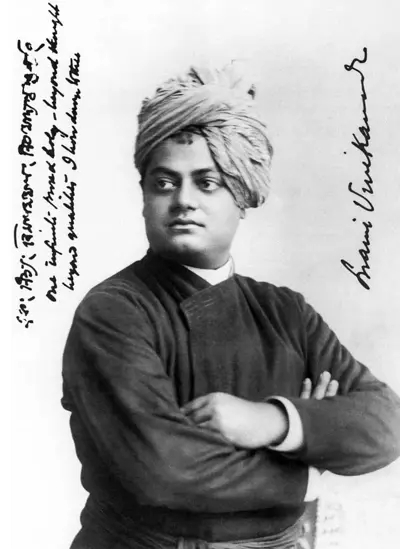
Swami Vivekananda, born Narendranath Datta (Bengali: [nɔrendronatʰ dɔto]), was an Indian Hindu monk. He was a chief disciple of the 19th-century Indian mystic Ramakrishna. He was a key figure in the introduction of the Indian philosophies of Vedanta and Yoga to the Western world, and is credited with raising interfaith awareness, bringing Hinduism to the status of a major world religion during the late 19th century. He was a major force in the contemporary Hindu reform movements in India, and contributed to the concept of nationalism in colonial India. Vivekananda founded the Ramakrishna Math and the Ramakrishna Mission. He is perhaps best known for his speech which began with the words "Sisters and brothers of America ...," in which he introduced Hinduism at the Parliament of the World's Religions in Chicago in 1893.
