Stanley Hauerwas Quotes
We, like the people of Israel, would like to think we get to name God. By naming God, we hope to get the kind of god we need; that is, a god after our own likeness.
Hauerwas, Stanley. Cross-Shattered Christ: Meditations on the Seven Last Words. Brazos Press, 2004.


His concept of the devine however was quite different and much more abstract than the Rabbis, Priests and Imams of the time. Albert Einstein, was a religious Jew, but his view of God was that of Spinoza (See Quotation 631763) who had been excommunicated by the Jews. Spinoza’s ideas were considered so radical and dangerous that he was the only man in history who was excommunicated by the Catholics, the Jews and the Muslims. Spinoza did not believe in a kins of anthropromorphic God who fabricated the earth and the stars. He saw God in the devine nature of the earth and the heavens and the mathematical rules that govern everything. It was this abstraction that was Spinoza's God which made sense to Einstein. Got was in the order, physical laws and mathematics of the universe. Modern scientists who are religious have no difficulty with the probablsitic nature of much of the physics that governs the univrese. It was God who created or more abstractly, was the mathematical and physical laws that in turn allowed the universe to be created from nothing.


There are many scientists who disagree with Johnson’s very unusual logic. They point out that it is certainly possible that God initially did not have had humans in minds, and when they evolved, decided that they were worthy of salvation history and then interfered to the extent of a virgin birth. Others would point out that just because man cannot exactly foresee the exact future pattern of evolution, does not men that a Supreme Being could not have initiated the mechanism that he/she knew would result in salvation history. The Pope and the Catholic Church see no inconsistency between Darwinism and the salvation history. Then there are those non-Christians who do not believe that God ever did introduce salvation and there are many more of them than there are Christians. Then, it is possible that God just set things in motion and had more important things then micromanaging evolution on our one planet in a universe of billions of billions. Last there are those who do not believe that there is or has been a God. Of course there is the possibility that Johnson is right, and religiously he may be, but that is not subject to scientific analysis.

This sura is seen as a limit on power of a ruler.


Bahaullah, the Bahai founder, sent letters to the Queen and most of the other major rulers of the world. Only Victoria responded positively. The Bahai believe that as a result Victoria, who came to the throne when most Englishmen felt that she would be the last British monarch, went on to rule for more than 60 years, the longest in history. All the other recipients who ignored their letter including Napoleon, the Pope, the Czar—all came to a relatively rapid end of their reign. Many Bahai believe this was divine will at work.

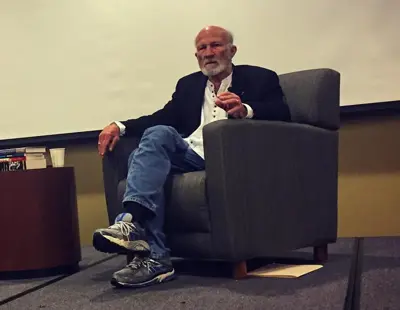
Stanley Martin Hauerwas (born 1940) is an American theologian, ethicist, and public intellectual. Hauerwas was a longtime professor at Duke University, serving as the Gilbert T. Rowe Professor of Theological Ethics at Duke Divinity School with a joint appointment at the Duke University School of Law. In the fall of 2014, he also assumed a chair in theological ethics at the University of Aberdeen. Before moving to Duke and the University of Aberdeen, Hauerwas taught at the University of Notre Dame. Hauerwas is considered by many to be one of the world's most influential living theologians and was named "America's Best Theologian" by Time magazine in 2001. He was also the first American theologian to deliver the prestigious Gifford Lectures at the University of St. Andrews in Scotland in over forty years. His work is frequently read and debated by scholars in fields outside of religion or ethics, such as political philosophy, sociology, history, and literary theory. Hauerwas has achieved notability outside of academia as a public intellectual, even appearing on The Oprah Winfrey Show.
