Mohammad Javad Zarif Quotes
We in the region will all have security or none of us will have security.
Mohammad Javad Zarif, Iranian Foreign Minister, Interview Al Jazeera, December 8, 2013
Sourced by: Eigen's Political and Historical Quotations


One major problem at the time was that the Soviet Union was supporting and instigating revolutions in many parts of the world. When most nations of the UN wanted to provide peace keeping troops to quell the conflict, the Russians would veto and block the effort, Vandenberg wanted the UN to change the rules regarding the veto. The original right of veto for the major nations was originally included at the insistence of the United States and many Americans did not want to give it up or have any exceptions lest there be more. The Russians at that time also did not want to give up any of their veto powers. Another method that Vandenberg wanted to solve the Russian peacekeeping blockage problem was for America to engage in more collective security pacts so that action could be taken without UN Security Council unanimity by going around the UN.


Other nations had nuclear weapons but were not regarded as threats to national and world security. The problem was that Iran was the ONLY nation which was a theocracy in which the leadership strongly advocated death (martyrdom) to defend Islam; had for years had a population that on frequent occasions publically called for “Death to the Untied States”; Iran’s President is the only national leader and member of the United Nations that has called for the obliteration of another member state—Israel; has continuous supported the worst of the non state terrorist organizations by giving them arms and money. A small nuclear bomb smuggled into the US by terrorist organizations could make 9-11 look like a minor problem.

This was the first time a Cabinet Member had ever addressed Congress. He had just concluded an alliance with Soviet Russia for fighting Hitler and Japan in the Second World War. Some were uneasy about an alliance with the Communist state. However, the Congress approved overwhelmingly.


He did not personally deliver the speech in Stockholm as at the time he feared that if he left the Soviet Union he would not be allowed back in. So he wrote it, and it was read for him.


Lindbergh, a great aviator, was a Fascist who was a great admirer and supporter of Hitler and Mussolini.

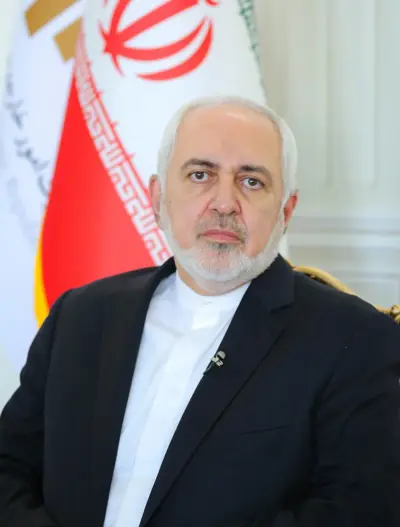
Mohammad Javad Zarif is an Iranian career diplomat and academic. He has been foreign minister of Iran since 2013. During his tenure as foreign minister, he led the Iranian negotiation with P5+1 countries which produced the Joint Comprehensive Plan of Action on 14 July 2015, lifting the economic sanctions against Iran on 16 January 2016. On 25 February 2019, Zarif resigned from his post as foreign minister. His resignation was rejected by President Hassan Rouhani and he continues as foreign minister.
