Hjalmar Branting Quotes
We here in the North have for many years had a natural tendency to feel that when our representatives come together at an international meeting, we embark on the quest of mutual understanding and support.
Branting, Hjalmar. "Fraternity Among Nations." Nobel Lectures, Peace 1901-1925, edited by Frederick W. Haberman, Elsevier Publishing Company, 1972, pp. 325-333.


India had just recently gained its independence from Britain.


Not only were the Democratic and Republican Parties at odds, but both political parties were split with the different factions very hostile to each other. The Populists and the Progressives were putting great pressure in the Democrats, and the Corporate Republicans strongly and often viscously opposed President Roosevelt. America was politically fractionated. Roosevelt called for a comity and unity which never took place.


In his younger days Jinnah was considered one of the greatest of the Indian Politicians in the Congress Party and all of India. Even though he was a Muslim, his leadership and political philosophy was appreciated by educated and politically active Indians of all faiths and casts. He was also so considered by the English Viceroy and his staff and noted by the politicians in England as a man who could bring Indians together without regard for religious or socio-economic status. He underwent a number of personal tragedies and changed radically until he was not only a sectarian Muslim leader but threatened and facilitated Islamic terrorism against all the other religions. Jinnah's flip flop on this point led to one of the great massacres and tragedies in human history" The Nightingale of India


Eisenhower was clear on this point but the neoconservatives of the Republican party advocated just the opposite and decades later would influence American foreign policy to have a different view and aggressively export American democracy as in the Iraq War.

Actually drafted by Secretary of State, John Foster Dulles

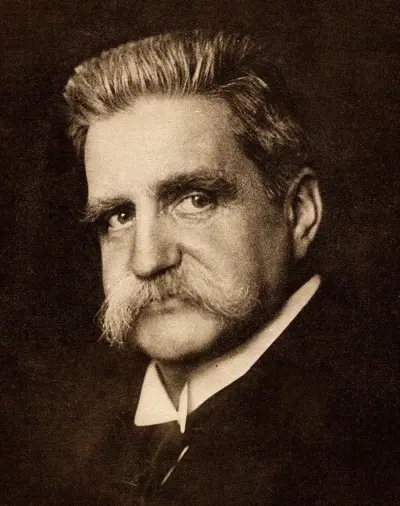
Karl Hjalmar Branting was a Swedish politician who was the leader of the Swedish Social Democratic Party (1907–1925) and Prime Minister during three separate periods (1920, 1921–1923 and 1924–1925). When Branting came to power in 1920, he was the first Social Democratic Prime Minister of Sweden. When taking office for a second term after the general election of 1921, he became the first socialist politician in Europe to do so following elections with universal suffrage. In 1921, Branting shared the Nobel Peace Prize with the Norwegian secretary-general of the Inter-Parliamentary Union Christian Lous Lange.
