Winston Churchill Quotes
We have sustained a defeat without a war.
Describing the Munich Pact with Germany:
Winston Churchill, 1874-1965, British Prime Minister (Conservative), Speech, House of Commons, October 5, 1938
Sourced by: Eigen's Political and Historical Quotations


The military were furious with him and tried to discredit him. But he had won the Pulitzer Price for Journalism twice and his view was read and considered by many. He tuned out to have been right and an uneasy cessation of hostilities and a divided Korea with 40,000 American troops at the border existed 60 years later in the longest military stalemate of the 20th century.


The Kaiser, facing a revolution, instructed Groener to use the army to put down the revolution. The Kaiser had to abdicate and the German Republic was born, soon to fall to the Nazis.


In 1991 Bush’s father, and his military and security advisors, after winning an overwhelming victory and accomplishing the war aims stated of rolling back the Iraqi aggression, decided that it was not worth the loss of American and Iraqi lives to try and occupy Bagdad and change the regime. America and its large coalition withdrew in victory having restored the pre-aggression status quo. The son and some of the right wing and neo conservatives always saw that strategy as a mistake and this quotation is often cited as showing this psychological animus to that decision of his father. His use of the term “cut and run” which implies defeat and some lack of courage is surprising to some as America and the coalition did anything but run as they had killed and destroyed far more or the Iraqi military power than the son’s later war did. It was a withdrawal and there were critics at the time, but no one accused the elder Bush of “cut and run” except that is the way the son obviously saw it.

There was a significant opposition in England who opposed the war against the rebellious colonies. Fox was one of the most outspoken who thought that England would not win.

Each day the German Airforce was sending air assaults over England. The English defenders were shooting down 2 Germans for every English plane lost. The British however were running out of pilots. Both sides were terribly weakened. However it was the Germans who cracked and called off the air assault prelude to the planned invasion of England.

The Russians, who had invaded Afghanistan successfully, then proceeded to lose Afghanistan.

The CIA and others had known that the Vietnam War was not winnable, yet the CIA Management and the Defense Department were stating the contrary. Gates was then an analyst for the CIA and it was his first job out of college. There was a rationale for the politicians and military leaders to lie about prospects in Vietnam. If we could not win, we wanted to negotiate a settlement on as good terms as we could get. However, if Ho Chi Min and the North Vietnamese knew that we did not think that we could win, they would have no incentive to concede on any points or compromise at all. To be successful in the negotiations, we had to persuade the Vietnamese that we thought we could win and would keep up the fighting and bombing unless they would concede some things. Unfortunately, by the time that we started negotiations, it was too late to be very successful in negotiations. All the parties to the negotiations at that point realized that we could not win. The only people who thought the contrary were a large block of American patriots who had been deceived by the politicians and the military leadership.
As the Majority Leader of the House, Eric Cantor had to resolve conflicts and for coalitions that will compromise to get anything done. However, the Tea Party movement didn’t want any compromises even if it meant shutting down the government and defaulting on the national debt. They ran against conservative Republicans in the Republican primary elections campaigning that the incumbent made and facilitated compromises with Democrats. In some districts like Eric Cantor’s there were enough primary voters who agreed. Terry was explaining the message that the other conservative politicians received.
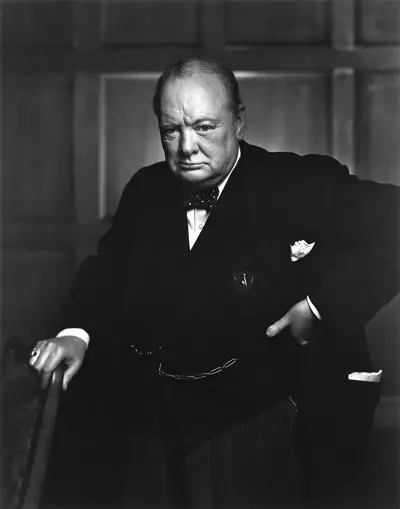
Sir Winston Leonard Spencer Churchill, KG, OM, CH, TD, DL, FRS, RA was the Prime Minister of the United Kingdom from 1940 to 1945, during the Second World War, and again from 1951 to 1955. Apart from two years between 1922 and 1924, Churchill was a Member of Parliament (MP) from 1900 to 1964 and represented a total of five constituencies. Ideologically an economic liberal and imperialist, he was for most of his career a member of the Conservative Party, as leader from 1940 to 1955. He was a member of the Liberal Party from 1904 to 1924. Churchill was also well known for his military career and as a historian, painter and writer, and among his many awards was the Nobel Prize in Literature.
