Jawaharlal Nehru Quotes
We have recently seen what happens to international treaties and the most sacred of covenants when they do not suit the purpose of Imperialism. We have seen these treaties torn up, friends and allies basely deserted and betrayed and the pledged word broken by England and France. Democracy and freedom were the sufferers and so it did not matter. But when reaction and autocracy and imperialism stand to lose, it does matter and treaties, however moth-eaten and harmful to the people they might be, have to be preserved.
Jawaharlal Nehru, 1889-1964, Prime Minister, India, Address, Ludhiana, 1939
Sourced by: Eigen's Political and Historical Quotations

This speech to over 100,000 people galvanized the Indian nationalists They had been asking the British to change the constitution to give India more independence. Churchill was opposed to any policy that would diminish the British Empire, but needed the Indians as men of India served in the British Army in every major theater of WWII. So instead of saying "No" Churchill held out the possibility but at a later time. He argued that it was inopportune to alter the Constitution in the midst of a world war.


At the time, Palestine was technically Turkish territory. Turkey was one of the defeated axis powers in World War I. England, as part of the World War I peace treaties, had control over Palestine as well as most of the rest of the Middle East.


War between England and Germany had just commenced.


He was expelled from Parliament for such.


Paine was describing the conquest of England in 1066 by William the Conqueror.


In 1942 it was clear that India would be given its independence soon. There were a number of sticky problems in doing so. One was the fact that when the British came to India, all the states were ruled by Maharajas (Princes, Kings, etc.). The British signed treaties with almost all of them guaranteeing to protect and preserve their local powers in exchange for acceding to British Rule of the national government. But when it came time for independence, democracy was the mode—even in England. The Maharajas insisted that the British leave them with their control of their states as they had agreed, as opposed to creating democratic government at the state level. In the final analysis, the Maharajas lost all their governmental functions and privileges but were able to retain much of their wealth.

England had negotiated and signed hundreds of treaties with the many maharajas and others in and regarding India. As India was establishing its own government under Great Britain, they kept running up against old treaties which limited their actions, especially for reform.
War between England and Germany had just commenced. The last sentence refers to the fact that Hitler had recently signed a peace pact with Stalin to everyone’s surprise as Hitler told the German people over and over that Russia was Germany’s biggest enemy. The pact was only a ruse on Hitler’s part to delay Russia’s entry into the war. Hitler broke the treaty and invaded Russia a little later.


“Cleaned out” meant destroyed. He had been a strong advocate of peace with whites. See {610679} .
“Musalmans” was then another English term for Muslims. At the time, the Hindus and Muslims of India were both under the rule of the British. As bad as Colonial Rule was, it had some advantages for the subjects and their desire to reform government and education. Ironically, there is no Islamic nation today, with the exception of Turkey, where Muslims have the rights, freedom and privileges as they had at the turn of the century in Colonial India.


Majority public opinion does not always prevail in a modern democracy as there are Constitutional limits on the prerogatives of the majority. Also leadership has played a strong role in America’s development where strong leaders have been able to do the right thing despite contrary public opinion.

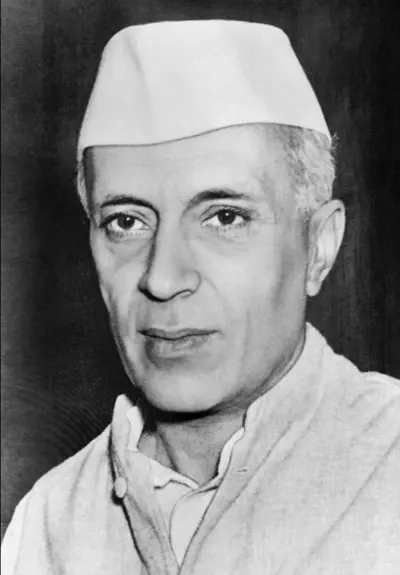
Jawaharlal Nehru was an Indian independence activist and, subsequently, the first Prime Minister of India, as well as a central figure in Indian politics both before and after independence. He emerged as an eminent leader of the Indian independence movement, serving India as Prime Minister from its establishment in 1947 as an independent nation, until his death in 1964. He was also known as Pandit Nehru due to his roots with the Kashmiri Pandit community, while Indian children knew him better as Chacha Nehru (Hindi: Uncle Nehru).
