Edward Everett Quotes
We have no concern with South America. We can have no well-founded political sympathy with them. We are sprung from different stock.
Edward Everett, 1794-1865, President, Harvard University, U.S. Secretary of State, U.S. Congressman & U.S. Senator (National Republican, MA), Massachusetts Governor, U.S. Minister to Great Britain, Editor, North American Review, Article, North American Review, c. 1820
Sourced by: Eigen's Political and Historical Quotations


Andrew Macdonald


In revolutionary America, not only were the colonists divided into revolutionists and loyalists to Britain, but among the revolutionists, there was no uniformity of manners, ideas, norms, beliefs or any other element of politics and unity. The great challenge to America and one of its great strengths is its diversity which is not a consequence of recent immigration, but has been a characteristic of the American body politic even in the Revolutionary War. Even English was not spoken by everyone as there were French, German, Scandinavian and other immigrants who had settled in the frontier and rarely came into contact with people other than those of their own family and community. The notion of a specific American culture to which which some today believe that we should return, never existed to begin with.

The Louisiana Purchase was part of a much larger grand vision for American expansion.


This veiled endorsement of violence against immigrants is typical of Edwards whose show is funded by notorious hate groups. His knowledge of history leaves much to be desired. America was not accepted as a First World power for quite a while—especially by the First World nations of Europe. In 1900 Argentina was a richer country than the United States. The great growth in American wealth, culture and power took place in the 20th century with the help of large immigrations of the “dregs of Europe” and elsewhere. The Irish, Poles, Ukrainians, Russians, Chinese, Croations, Mexicans were all immigrants from other than the First World yet it was they who helped make America a First World nation.

The Turks had massacred the vast majority of their Armenian population, and treated the Greeks badly killing and them many of them from territories the Ottoman Turks had conquered. Jews fared better but were 2nd class citizens. Bristol was the American State Department’s senior official and was very “understanding” of the murders and ethnic cleansing despite the fact that President Wilson and most American politicians were very opposed to the Turkish massacres. See {620614} and {620599} . Two factors makes this quotation very significant. First, at the time the State Department was not really under the control of either the President or the Congress. It was not rare for the Department to have its own policies and implement them. This began to change in WWII and FDR exercised much more control than previous presidents since Theodore Roosevelt. The second factor is that there were many racists throughout the State Department—Bristol was only one. There was little concern for minorities’ welfare and the emphasis was on commerce. See {620600} Even in Truman’s administration, the President had massive opposition from the State Department for his policy of recognizing the State of Israel. Today, this kind of racism in the State Department is very rare, and human rights has been one of their major concerns. There were many changes in 75 years.


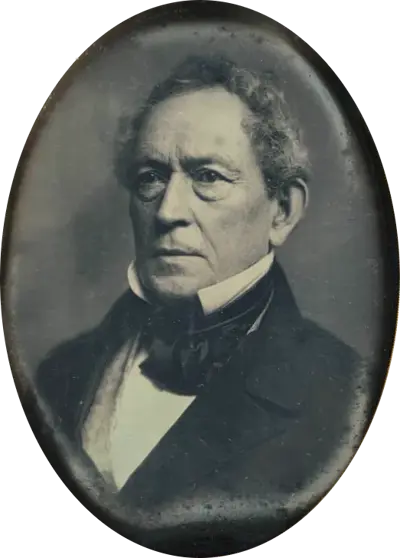
Edward Everett was an American politician, pastor, educator, diplomat, and orator from Massachusetts. Everett, as a Whig, served as U.S. Representative, U.S. Senator, the 15th Governor of Massachusetts, Minister to Great Britain, and United States Secretary of State. He also taught at Harvard University and served as its president.
