Birch Bayh Quotes
We have 28,000 drug patents held by American universities that are not being developed.
The Bayh-Dole Act (Patent and Trademark Law Amendments Act) for the first time allowed universities which held patents obtained as a result of Government Funded Research to enter into agreements with corporations to develop new drugs from those patents. The theory was that, the number of new drugs brought to the market would substantially increase beyond only the hundred or so that appeared each year. Unfortunately, the legislation did not have the desired effect. By the first decade of the 21st century, the number of annual NEW drugs being brought to market was under 30 and in 2010 was only 10. The cost of going through required trials for FDA drug approval has reached hundreds of millions of dollars, and most organizations cannot afford to even make the attempt. Even if a drug is very promising, the drug companies will not invest the money unless there are enough people suffering from the malady the drug treats and the medicine has to be taken for a long time as with chronic conditions. The system works poorly for the society and the health system. Reforms are needed.
Birch Bayh, U. S. Senator (Democrat, IN), Senate Debate 1980
Sourced by: Eigen's Political and Historical Quotations

The major killer diseases such as malaria and sleeping sickness are not contracted by Americans, and America is the only large country in the world where the Governments allow the drug companies to charge such high prices and make such huge profits. So any drug that Americans might pay for is a better potential profit generator than one that would be critical to the lives of millions where the governments to preserve lives would force the prices down or allow other companies to also make the drug. See {628648} for other factors affecting drug company priorities.
The “inflated prices” refers to the fact Americans pay more for pharmaceuticals than any other country in the world as the American government allows the companies to charge any amounts while other governments either negotiate or mandate much lower prices.


This quotation is notable as it shows that problems that are not dealt with in one generation can continue for generation after generation. Today we have the exact same problem with overly expensive drugs. In a capitalistic system, every business with good products and sales should make profits. But products that people need to say alive, most people think, should not make larger profit percentages than almost any other business. But this problem is over half a century old in America.

Shortly after the Cuban revolution, the U. S. placed an embargo on the Fidel Castro regime. Medicine was one of the critical items that hurt Cuba the most. However, the Cubans, facing the problem of inability to import any U. S. patented medicinals, moved to a two pronged approach to health care. First since the could not get the medicines for the ill people, the places an enormous emphasis on preventive medicine which U. S. medical experts have always advocated, but America has been slow to implement. The second effort was to create their own drug research and manufacturing industry. They were amazingly successful at both even as the rest of the communist regime was crumbling. At the time of this quotation, Cubans had a HIGHER average lifespan than Americans, and the Cuban drug industry had become the 3rd largest in Cuba earning hard currency for the country. The had over 200 international patents on medicines and were selling to 57 countries.


This principle justified the Government in allowing a local Indonesian company to manufacture anti-AIDS drugs without paying licensing rates demanded by the drug companies that held the patents. The principle is that patent rights and the desire to profit should not supersede the rights of people to continue to live because they cannot afford the drugs to keep them alive. The local manufacturers provide the drugs to the government at cost of manufacture which is a tiny proportion of the price the patent owner charges.


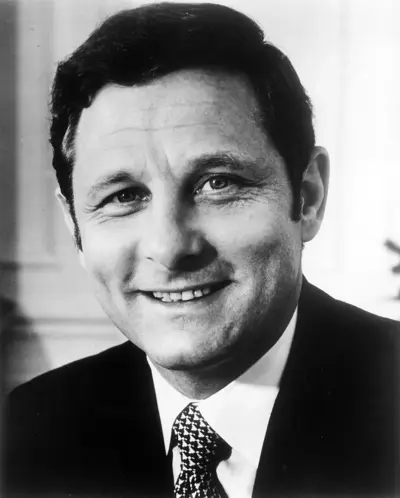
- Born: January 22, 1928
- Died: March 14, 2019
- Nationality: American
- Profession: Politician
Birch Evans Bayh Jr. was an American Democratic Party politician who served as U.S. Senator from Indiana from 1963 to 1981. He was first elected to office in 1954, when he won election to the Indiana House of Representatives; in 1958, he was elected Speaker, the youngest person to hold that office in the state's history. In 1962, he ran for the U.S. Senate, narrowly defeating incumbent Republican Homer E. Capehart. Shortly after entering the Senate, he became Chairman of the Subcommittee on Constitutional Amendments, and in that role authored two constitutional amendments: the twenty-fifth—which establishes procedures for an orderly transition of power in the case of the death, disability, or resignation of the President of the United States—and the twenty-sixth, which lowered the voting age to 18 throughout the United States. He is the only non–Founding Father to have authored two constitutional amendments. Bayh also led unsuccessful efforts to ratify the Equal Rights Amendment and eliminate the Electoral College.
