George Sand Quotes
We do not precisely enjoy liberty at the Figaro. M. de Latouche, our worthy director (ah! you should know the fellow), is always hanging over us, cutting, pruning, right or wrong, imposing upon us his whims, his aberrations, his fancies, and we have to write as he bids.
Sand, George. Letters of George Sand. Translated by Raphael Ledos de Beaufort, vol. 1, Ward and Downey, 1886.


Video and pirated copies got out, and were more widely distributed than if the film had been released.


The Masses was a left wing publication which the then Post Office officials decided were “dangerous”. Later, the Supreme Court would hold that there could not be this degree of political censorship by Post Office officials.

Vladimir Lenin. Lenin was echoing criticisms that were made the world over and even by some in the United States. However, his solution to have the press controlled by the ruling party just changed the cast of characters who were propagandizing and distorting the truth. Lenin was not able to offer a better solution nor were others. However, with enough affluence the capitalist society produced enough different publishers all competing that one did not dominate public opinion. With technology of TV and the Internet, the bar to entry is so small that almost anyone can be a publisher and find an interested market. In a way technology has solved much of the problem for capitalistic and totalitarian societies alike. In the latter, even censorship is not easy or feasible on a large scale.


During World War II, reporters covering Eisenhower found out where the next allied attack was planned:. Not a word of the operation leaked or was printed.

This was a description of the post WWII censorship in East Germany under the communists, but it applies to most political censorship in any country. The same dynamics functioned in the United States during both World Wars and during the red scare of McCarthyism.
See related quote.


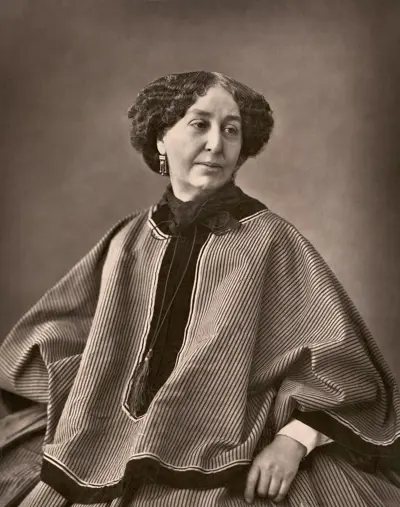
Amantine Lucile Aurore Dupin, best known by her pen name George Sand (French: [ʒɔʁʒ sɑ̃d]), was a French novelist, memoirist, and journalist. One of the most popular writers in Europe in her lifetime, being more renowned than both Victor Hugo and Honoré de Balzac in England in the 1830s and 1840s, Sand is recognised as one of the most notable writers of the European Romantic era.
