Richard Louv Quotes
We cannot protect something we do not love, we cannot love what we do not know, and we cannot know what we do not see. Or hear. Or sense.
Louv, Richard. The Nature Principle: Human Restoration and the End of Nature-Deficit Disorder. Algonquin Books, 2011, p. 104.

His lesson was that in order to have a society that will protect animals, we must first enable citizens to know about the animals and then to love the animals.


He was talking about teh importance of getting people to learn about and know birds and other wildlife so then they would be enviornmentally conscious by wanting to take care of the wildlife. However, this quotation has much more generality, in that this characeristic of human nature seems to apply to immigrants, people of different religions and even of different polarized political subgroups. Contact with and knowing others tends to induce empathy, care, concern adn love.


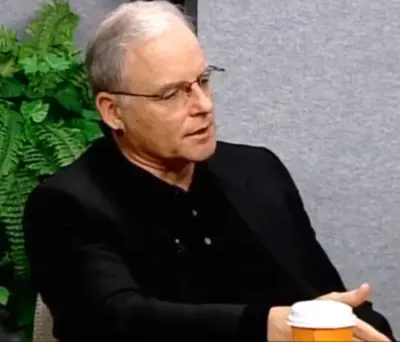
Richard Louv (born 1949) is an American non-fiction author and journalist. He is best known for his seventh book, Last Child in the Woods: Saving Our Children From Nature-Deficit Disorder (first published in 2005 by Algonquin Books of Chapel Hill), which investigates the relationship of children and the natural world in current and historical contexts. Louv created the term "nature-deficit disorder" to describe possible negative consequences to individual health and the social fabric as children move indoors and away from physical contact with the natural world – particularly unstructured, solitary experience. Louv cites research pointing to attention disorders, obesity, a dampening of creativity and depression as problems associated with a nature-deficient childhood. He amassed information on the subject from practitioners of many disciplines to make his case, and is commonly credited with helping to inspire an international movement to reintroduce children to nature.
